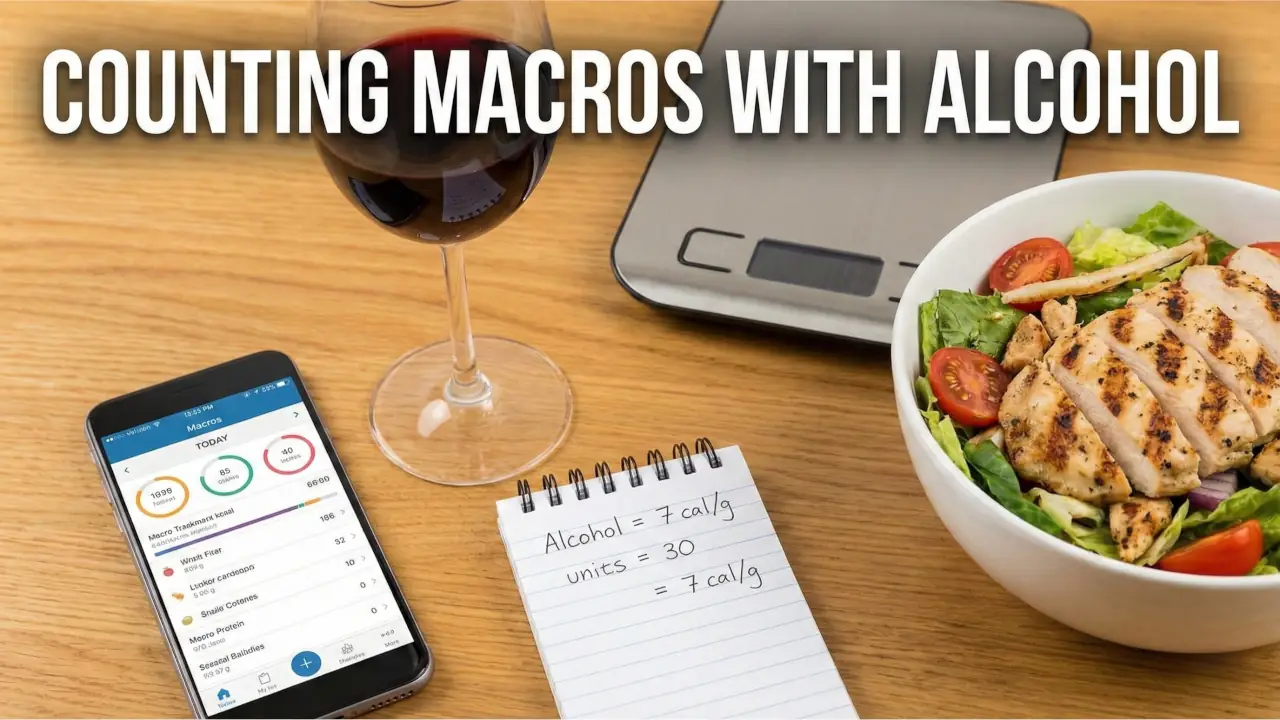
Let’s be real for a second. You’ve been hitting your macros perfectly all week. You’ve meal prepped like a boss, crushed your workouts, and hit your protein goals every single day. But now it’s Friday night. Your friends are hitting up the local brewery, or maybe you just want a glass of Pinot Noir to unwind after a stressful week.
The panic sets in. “Will this ruin my progress? How do I even log this? Is a margarita a carb or a fat?”
As a nutrition coach, this is easily the top question I get from clients who want to cut out the mindless night snacking but don’t want to live like a monk. The good news? You do not have to give up alcohol completely to reach your fitness goals. The “all or nothing” mindset is the enemy of consistency.
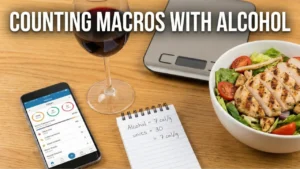
In this guide, I’m going to teach you exactly how to master counting macros with alcohol, how to track it correctly (because most apps get it wrong), and how to enjoy a drink without hitting the pause button on your results.
Also Read: Best Macros for Weight Loss
Is alcohol a macronutrient?
Short answer: No — alcohol (ethanol) is not classified as a macronutrient. The three classic macronutrients are protein, carbohydrates, and fat. Ethanol is a separate energy source that provides ~7 calories per gram, so it contributes energy to your daily total even though it doesn’t supply protein or essential fats. Treat alcohol as an extra calorie source that sits between carbs/protein (4 kcal/g) and fat (9 kcal/g) in energy density.
Alcohol = 7 kcal/g + Top Low-Cal Drink Swaps
When people say, “I eat clean all week but still can’t lose fat,” alcohol calories are often the missing piece. Unlike protein, carbs, or fat, alcohol doesn’t show up clearly on nutrition labels — but it still contributes real energy to your day.
Alcohol provides 7 calories per gram, making it more calorie-dense than carbs or protein. That’s why drinks can quietly push you over your daily targets if you’re not tracking them correctly. The visual below breaks down how alcohol calories work and highlights macro-friendly drink swaps that are easier to fit into a calorie-controlled plan.
(This is especially helpful if your goal is fat loss without giving up social events.)
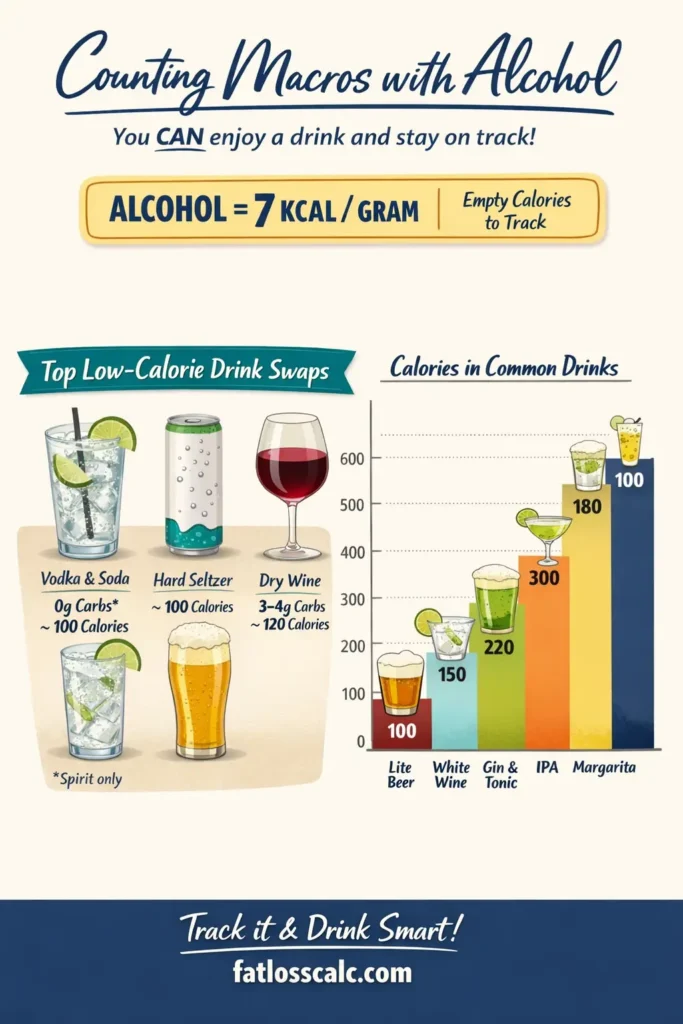
As you can see, choosing lower-calorie drinks like vodka with soda, hard seltzers, or dry wine can make a big difference. These options allow you to enjoy alcohol while still staying within your macros — as long as you log the calories honestly and consistently.
If you’re unsure whether drinks are putting you into a calorie surplus for the day, it’s smart to double-check your numbers using a TDEE calculator and plan ahead. Awareness is what turns alcohol from a progress killer into a manageable part of your lifestyle.
How to Count Alcohol Macros — Simple Step-by-Step
There are two widely used, practical approaches. Pick the one that fits your tracking app and how exact you want to be.
Method A — Count alcohol by calories (recommended):
- Find the drink volume and ABV (e.g., 5 fl oz white wine at 12% ABV).
- Convert to grams of ethanol: grams alcohol ≈ volume_ml × ABV × 0.789 (ethanol density ≈ 0.789 g/ml).
- Calories from alcohol = grams alcohol × 7 kcal/g.
- Log the drink as a custom entry in your tracker with the total calories, and — if your app requires macros — allocate the calories to “Carbs” (divide calories by 4 to get carb-equivalent grams) or create a separate “Alcohol” macro if the app supports it. This keeps your protein/fat targets intact while reflecting true energy intake. Guides that teach calorie-first logging show this is the cleanest way to avoid miscounting.
Method B — Log as carbs/fat surrogate (quick & dirty):
Some people convert alcohol calories into “carb grams” (calories ÷ 4) or “fat grams” (calories ÷ 9) to force the app totals to add up. This is less precise but workable if your tracker lacks a custom alcohol entry. Be consistent with whichever surrogate you choose.
Pro tip: Many popular trackers (including community guides for MyFitnessPal) let you create/duplicate drinks with accurate calories — use branded entries where possible, or save a custom recipe for your favorite cocktail.
Will Alcohol Inhibit Fat Loss?
Alcohol can make fat loss harder — but it’s not an absolute blocker. Mechanisms include:
Taken together, these effects increase the likelihood of slower progress if you drink often or drink heavily. Moderate, counted drinking is compatible with fat loss for many people.
If you’re worried that tonight’s drinks pushed you into a calorie surplus for the day, run your numbers through the TDEE calculator.
Macro-Friendly Alcoholic Drinks (Best → Worst)
Common Mistakes When Counting Macros with Alcohol
One drink rarely ruins progress. Patterns do. Here are the mistakes I see most often:
If fat loss feels inconsistent, alcohol habits are often where the leak is happening.
Wine Macros
Wine is a favorite for many, but serving size matters. A standard “pour” is 5 ounces, but most restaurants pour 6 to 9 ounces.
| Nutrient | Approx. amount (5 fl oz) |
| Calories | ~120–125 kcal |
| Carbohydrates | ~3–4 g |
| Protein | ~0.1 g |
| Fat | 0 g |
| Alcohol (ethanol) | ~13–15 g (~98–105 kcal from alcohol) (varies by ABV — typical table wine 11–13.5% ABV). |
Note: wine nutrition varies by style and sweetness. Sweet/dessert wines carry more carbs and calories.
Wine vs Beer vs Spirits: Macro Comparison
Not all alcoholic drinks affect your macros the same way. Two drinks can contain similar alcohol content but very different amounts of carbs and calories — especially when you compare wine, beer, and spirits.
This comparison infographic shows standard serving sizes, calories, and macros for the most common drink types so you can make smarter decisions without guessing. If you’re following IIFYM, low-carb, or general macro tracking, understanding these differences is key.

Beer tends to be higher in carbohydrates, while wine sits somewhere in the middle. Plain spirits contain no carbs on their own, which is why they’re often the easiest to fit into a macro-based diet — as long as mixers stay sugar-free.
The takeaway isn’t that you must avoid certain drinks completely. It’s about choosing intentionally, keeping portions realistic, and accounting for alcohol calories just like you would any other food. When you do that, alcohol can absolutely fit into a sustainable fat-loss plan.
Calories in Common Wines, Beers, and Cocktails
To help you make smarter choices at the bar, here is a quick reference guide.
| Drink Type | Serving Size | Est. Calories | Carb Equivalent (/4) | Fat Equivalent (/9) |
| Red Wine | 5 oz | 125 | 31g | 14g |
| White Wine | 5 oz | 120 | 30g | 13g |
| Standard Beer (Lager) | 12 oz | 150 | 37.5g | 16.5g |
| Lite Beer | 12 oz | 100 | 25g | 11g |
| IPA (India Pale Ale) | 12 oz | 200 – 280 | 50g – 70g | 22g – 31g |
| Stout | 12 oz | 170 – 200 | 42.5g | 19g |
| White Claw / Seltzer | 12 oz | 100 | 25g | 11g |
| Gin & Tonic | 8 oz | 190 (tonic has sugar!) | 47.5g | 21g |
| Martini (Dry) | 2.5 oz | 180 | 45g | 20g |
| Margarita (Standard) | 8 oz | 250 – 400 | 62g – 100g | 27g – 44g |
| Piña Colada | 8 oz | 450+ | 112g | 50g |
| Mimosa | 4 oz | 85 | 21g | 9.5g |
Pro-Tip: If you love Gin and Tonics, swap the Tonic (sugar water) for Soda Water (bubbles) and a squeeze of lime to save roughly 80 calories.
Quick Rules to Keep Drinking Compatible with Progress
- Plan & log: add the drink calories before you order, or log immediately after.
- Prefer spirits + zero-cal mixers, dry wines, or hard seltzers.
- Don’t “save calories” by skipping meals — that often leads to overeating later.
- Hydrate: water between drinks reduces calories and next-day appetite.
- Set limits: a moderate plan (e.g., 1–2 drinks) is far easier to fit than binge nights.
- Keep protein high on drinking days — it preserves lean mass and satiety.
Also Read: 20 Macro Friendly Snacks Under 150 Calories
Conclusion
Counting macros with alcohol is doable and realistic. Alcohol isn’t a macronutrient, but it provides meaningful calories (≈7 kcal/g) that must be counted if you want reliable progress. The simplest, most accurate approach is to calculate or look up the drink’s total calories, log that in your tracker, and keep protein/fat priorities intact. Choose low-sugar drinks, avoid sugary mixers, and plan socially — you’ll enjoy life and stay on target.
Frequently Asked Questions
View Sources
- National Institute on Alcohol Abuse and Alcoholism: Alcohol Calorie Calculator
- USDA FoodData Central: Nutritional Data for Alcohol
- Healthline — review of alcohol’s effects on weight loss and behavior.