
Have you ever found yourself staring into the fridge at 9 PM, not really hungry, but just… wanting something?
I have. For years, my evening reward was a bowl of cereal or a few cookies. I told myself it didn’t matter since I ate well during the day. But my energy was sluggish, my weight crept up, and I felt out of control around food at night.
What if I told you there’s one powerful, free, and simple change that can stop this cycle in its tracks? It’s called eating within a 10-hour window, and it’s not just another diet fad. It’s a practice backed by compelling science that aligns your eating with your body’s natural rhythms.
The best part? You don’t have to change what you eat to start. You just change when you eat.
Also Read: Carbs Are Not Bad — Why Carbohydrates Can Help You Lose Weight
What Is Eating Within a 10-Hour Window?
Eating within a 10-hour window is a form of Time-Restricted Eating (TRE) — a type of intermittent fasting where all daily food intake happens within 10 hours, followed by a 14-hour fast. This structure supports your circadian rhythm and can help reduce cravings, particularly at night.
For decades, the focus has been solely on calories in versus calories out. But groundbreaking research is shifting that paradigm.
It turns out our bodies are designed to process food most efficiently during daylight hours. Our metabolism, hormone production, and digestive system follow a powerful 24-hour cycle known as our circadian rhythm.
When we eat late into the night, we send conflicting signals to this internal clock. It’s like trying to force your body to do intense cardio right before bed—it goes against its natural programming.
Consuming calories when your body expects to be resting and repairing leads to poor metabolic processing. This can result in weight gain, blood sugar spikes, and disrupted sleep, even if the calories themselves are “healthy.”
Benefits of Eating Within a 10-Hour Window
| Benefit | Description |
| Weight Management | Consistently eating in a 10-hour window has been linked to weight loss and healthier body composition by reducing overall calorie intake and improving metabolic efficiency. |
| Heart Health | TRE has shown reductions in blood pressure and cardiovascular risk markers, including “bad cholesterol.” |
| Blood Sugar Control | Time-restricted eating may help improve glucose tolerance and insulin regulation. |
| Appetite & Hunger | Many people report less evening hunger and reduced night snacking when eating within a controlled window. |
| Circadian Alignment | Eating earlier in the day can align metabolism with your biological clock, optimizing digestion and energy use. |
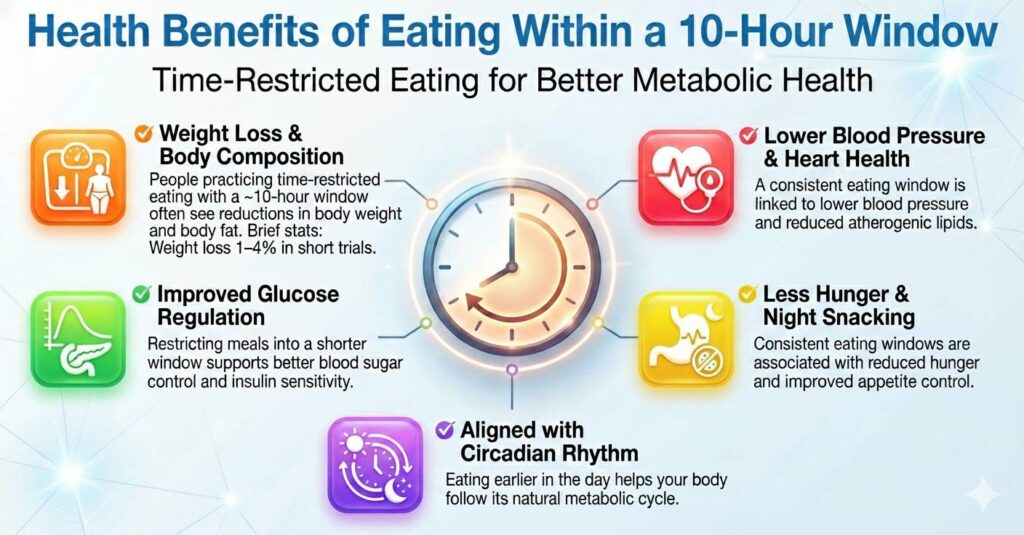
Limiting Food Consumption to a 10-Hour Window Improves ALMOST Everything
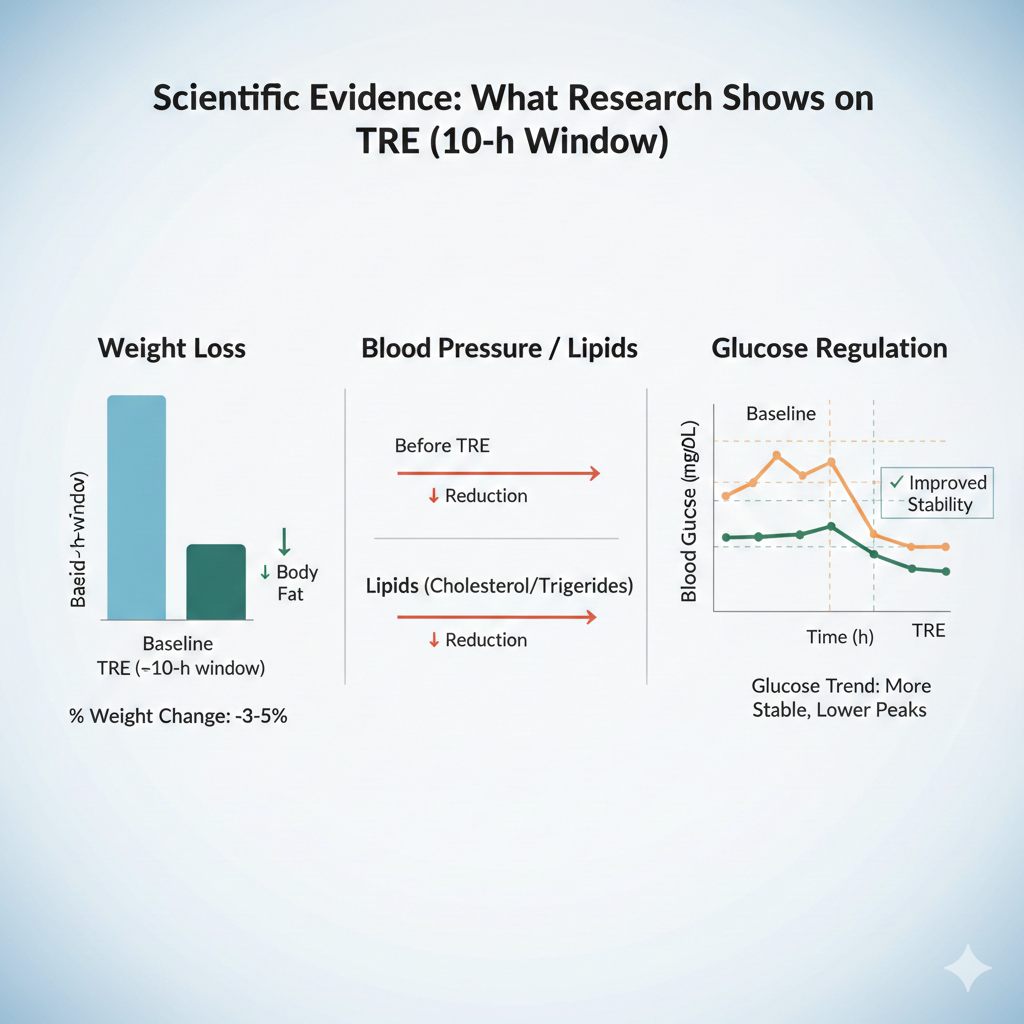
You might be wondering, “What’s so magical about 10 hours?” A landmark study published in Annals of Internal Medicine provides the answer. Researchers asked a group of adults with metabolic syndrome to condense their eating into a daily 10-hour window for 12 weeks. They were not told to count calories or change what they ate—only when.
The outcome was stunning:
The key takeaway?
By simply giving your body a longer, consolidated break from digestion (a 14-hour fast), you trigger a cascade of automatic health benefits. Your body can focus on repair, fat burning, and regulation instead of constantly processing food.
The Outcome?
When you adopt a 10-hour eating window consistently, you can expect:
These improvements often translate into better long-term health and lifestyle habits.
TRE – Time-Restricted Eating
Time-Restricted Eating (TRE) is a scientific approach to eating that focuses on when you eat, not just what you eat. While extreme fasting methods can be daunting, a 10:14 schedule (10 hours eating, 14 hours fasting) is accessible for most people. It works because it synchronizes your food intake with your circadian biology.
As researchers from the Salk Institute and UC San Diego have noted, “Our bodies actually process sugars and fats very differently depending on the time of day.” In the morning and afternoon, your insulin sensitivity is higher, meaning your body is better at using food for energy. In the evening, it becomes more resistant, making late-night calories more likely to be stored as fat.
By creating a consistent daily fasting period, you reinforce your body’s natural rhythm. This leads to more stable energy, reduced inflammation, and yes—the end of compulsive night snacking.
The Challenge: Can You Do This?
I know what you’re thinking: “A 10-hour window? If I eat breakfast at 7 AM, I’d have to finish dinner by 5 PM. That’s impossible with my schedule!”
I felt the same way. The secret isn’t about eating dinner at 5 PM; it’s about strategically shifting your window to fit your life. The goal is to stop eating 2-3 hours before bed and to break your fast at least an hour after waking. For most people, this means starting your eating window later in the day.
Here’s exactly how I’ll implement the 10-hour window (and how you can, too):
To make this foolproof, I always recommend using a tool like our free Intermittent Fasting Calculator. Just input your desired eating window, and it will calculate your fasting schedule for you, taking all the guesswork out of the equation.
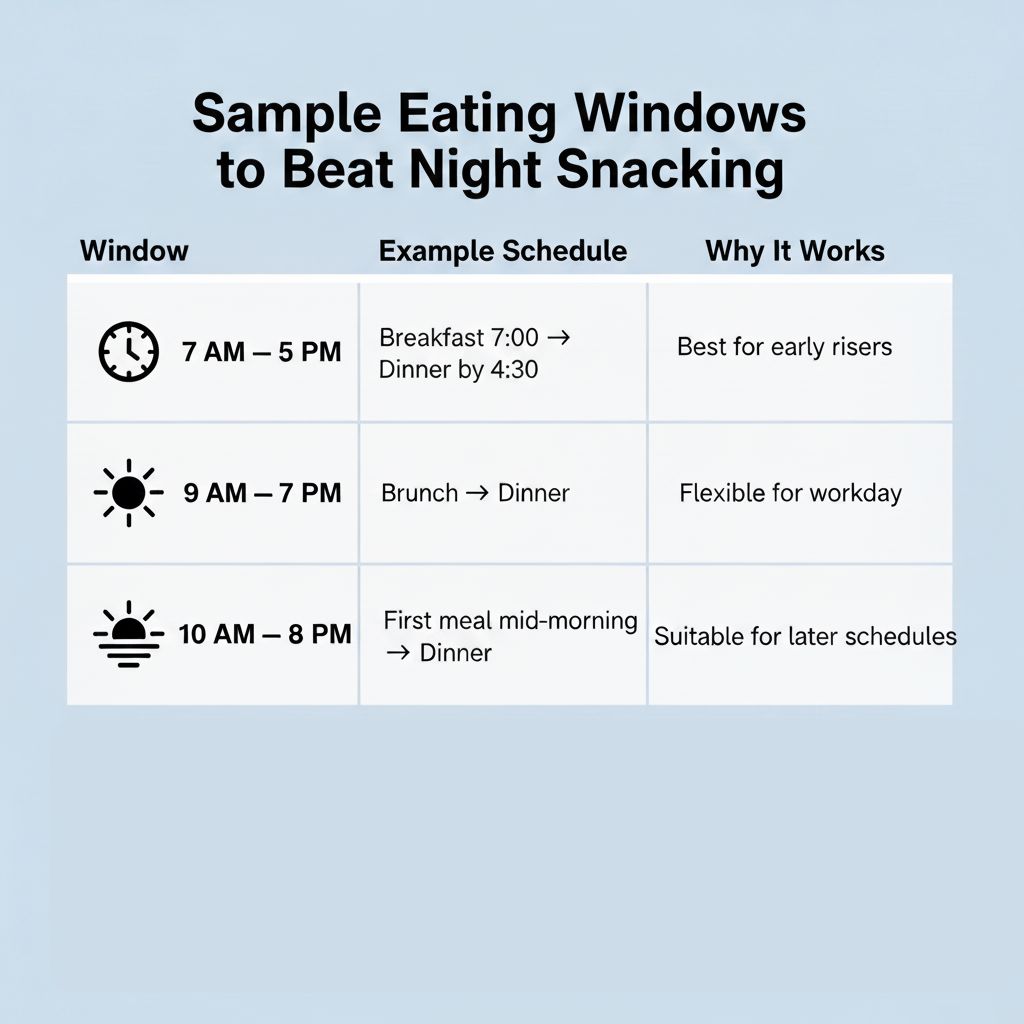
Your 10-Hour Window Action Plan & Helpful Tools
Implementing this practice is easier with the right framework. Here’s a visual guide to how your day and metabolism align on a 10-hour schedule:
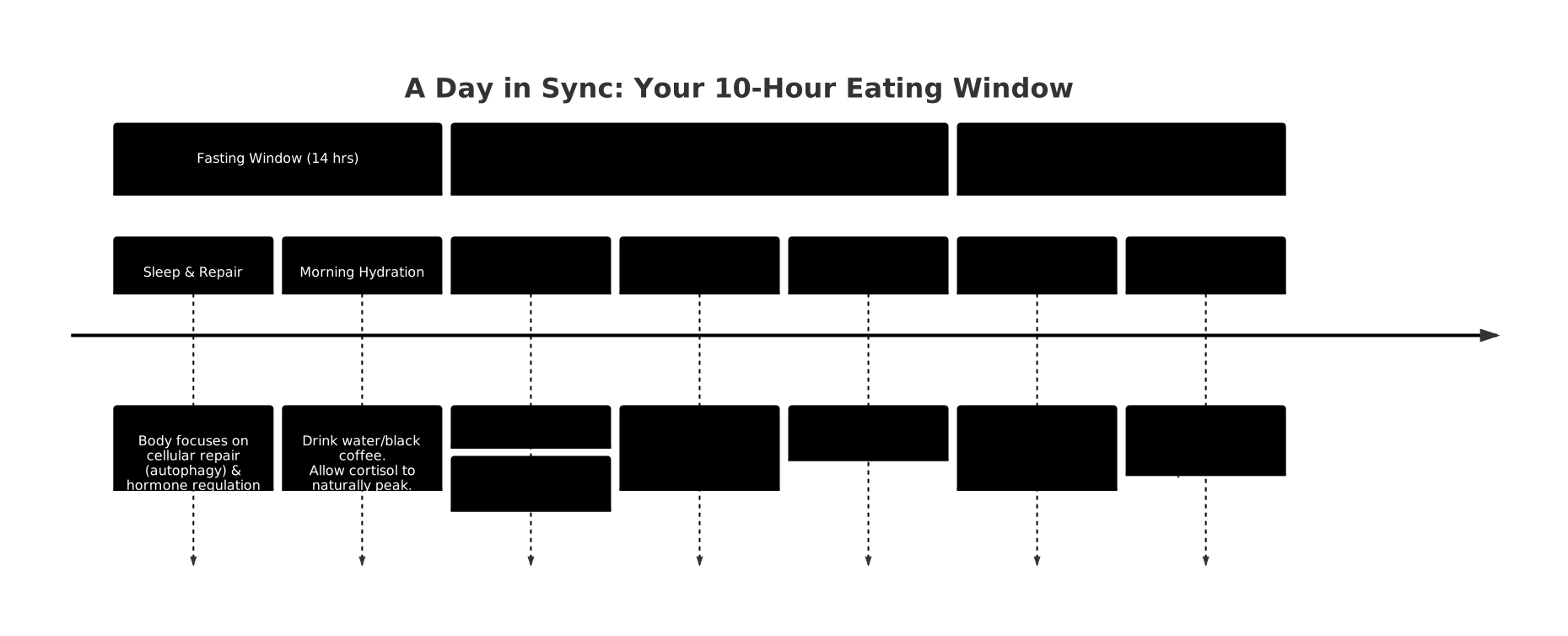
To find your perfect personalized schedule, plug your details into our Intermittent Fasting Calculator. It will help you lock in your 10-hour window based on your wake-up time and lifestyle.
Remember, what you eat in your window still matters for optimal health and body composition. Pair your 10-hour schedule with balanced nutrition. Our Macro Calculator can help you determine the ideal balance of protein, carbs, and fats for your goals. And to track your progress beyond the scale, use our Body Fat Percentage Calculator.
What the Research Says
A controlled study found that a 10-hour TRE protocol resulted in weight loss, better body composition, lower blood pressure, and improved lipid profiles in adults with metabolic syndrome.
Some evidence suggests that aligning meals earlier in the day with your circadian rhythm may improve metabolic outcomes.
Also Read: 10 Evidence-Based Benefits of Hiring a Nutrition Coach
Other research indicates that eating within consistent time windows may help regulate appetite and reduce night hunger.
Note: Not all studies show dramatic differences when meal timing is isolated from calories — but most agree that timing helps people eat less overall.
Conclusion
Eating within a 10-hour window is more than a diet trick. It’s a fundamental reset for your metabolism and your relationship with food. It gives you a clear, simple rule that eliminates constant decision-making and nighttime grazing.
You are not powerless against those evening cravings. Your body is designed for rhythm and rest. By giving it the predictable break it needs, you unlock a simpler path to better energy, a healthier weight, and peace of mind around food.
Start tonight. Finish your dinner, brush your teeth, and declare the kitchen closed. Your 14-hour healing fast starts now. You’ve got this.
Frequently Asked Questions
View Sources
- Manoogian, E. N., et al. (2024). Time-Restricted Eating in Adults With Metabolic Syndrome: A Randomized Controlled Trial. Annals of Internal Medicine.
- The Salk Institute. (n.d.). How Time-Restricted Eating Could Be Key to Health. Retrieved from salk.edu.
- Patterson, R. E., & Sears, D. D. (2017). Metabolic Effects of Intermittent Fasting. Annual Review of Nutrition.