Coffee is one of the world’s most beloved beverages — especially when you’re focused on health, productivity, and weight loss. Many people think coffee is calorie-free, but the truth comes once you add milk, sugar, syrups, and whipped cream. In this comprehensive guide, you’ll learn exact Calories in Coffee, how those calories add up, and which coffee drinks are best if you’re cutting night snacks or trimming calories.
Also Read: How Much Meat Should I Eat?
How Many Calories Are in Coffee?
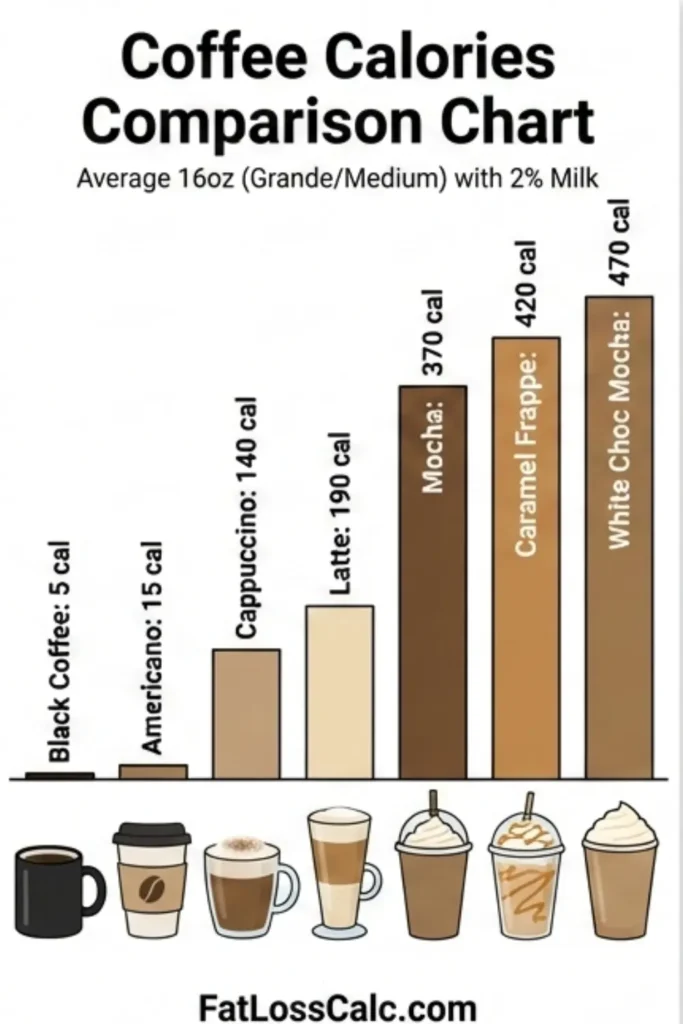
Plain black coffee contains 2–5 calories per cup. Coffee drinks with milk, sugar, or syrups can range from 50 to over 1,000 calories, depending on size and ingredients.
Coffee Calories Chart
The most crucial thing to understand is that coffee itself is not the problem. The dramatic differences you see in the table below are almost entirely due to the milk, sweeteners, syrups, and toppings added to it.
| Beverage | Volume (fl oz) | Calories |
| Instant Coffee (black) | 8 fl oz | ~4 |
| Espresso (single) | 1 fl oz | ~1–4 |
| Brewed Coffee (black) | 8 fl oz | ~2–5 |
| McDonald’s Cappuccino | 16 fl oz | ~130 |
| McDonald’s Latte | 16 fl oz | ~180 |
| McDonald’s Mocha | 16 fl oz | ~330 |
| McDonald’s Brewed Coffee (Large) | 16 fl oz | 0 |
| McDonald’s Caramel Frappe | 21 fl oz | ~670 |
| Dunkin Donuts Latte | 10 fl oz | ~120 |
| Dunkin Donuts Cappuccino | 10 fl oz | ~80 |
| Dunkin Donuts Mocha Swirl Latte | 10 fl oz | ~230 |
| Dunkin Donuts Brewed Coffee | 10 fl oz | ~15 |
| Dunkin Caramel Swirl Frozen Coffee | 32 fl oz | ~1170 |
| Starbucks Brewed Coffee | 16 fl oz | ~5 |
| Starbucks Caffè Americano | 16 fl oz | ~15 |
| Starbucks Caffè Latte (Grande) | 16 fl oz | ~190 |
| Starbucks Caffè Mocha (no whip) | 16 fl oz | ~300-350* |
| Starbucks Caffè Mocha (whip) | 16 fl oz | ~350-400* |
| Starbucks Cappuccino (Grande) | 16 fl oz | ~140 |
| Starbucks Peppermint White Chocolate Mocha (whip) | 16 fl oz | ~400+ |
| Starbucks Caffe Vanilla Frappuccino (whip) | 16 fl oz | ~280-350 |
| Starbucks Hot Chocolate (no whip) | 12 fl oz | ~230 |
| Starbucks Java Chip Frappuccino | 16 fl oz | ~400+ |
Note: Calorie counts can vary based on specific milk choices, customization, and regional recipes. Data is based on standard menu formulations from company nutrition guides and aggregated sources
Where Do All Those Calories Come From?
Most coffee calories come from milk, sugar, flavored syrups, and whipped cream — not from the coffee itself.
Instant Coffee & Black Coffee have nearly Zero Calories. When you brew coffee without milk, sugar, or cream, the calorie count is surprising low:
Lowest-Calorie Coffee Drinks
- Black brewed coffee (2–5 calories per cup)
- Espresso (single or double) (1–8 calories)
- Caffè Americano (10–15 calories)
- Coffee with 1 tbsp skim milk (10–15 calories total)
That’s because plain coffee contains almost no fat, carbs, or sugar — just tiny amounts of protein and antioxidants. If you drink it without additives, coffee is essentially calorie-free.
👉 Best choice for weight loss? Black brewed coffee — no milk, no sugar.
Watch Out for the Milk and Sugar
This is the primary calorie crossover point. The switch from “coffee” to a “coffee drink” happens here.
- Milk Matters: The type and amount of milk are huge factors. A splash of skim milk (about 2 tbsp) adds only about 10 calories, while the same amount of half-and-half adds 40 calories. A full Grande latte from Starbucks contains about 12 ounces of 2% milk, contributing the bulk of its 190 calories.
- The Sweetener Spike: Sugar and flavored syrups are pure, simple carbohydrates. Just one teaspoon of granulated sugar adds 16 calories. The flavored syrups used in mochas, caramel macchiatos, and seasonal specials are even more potent, often containing 20-30 calories per pump, and a single drink can easily get 4 or more pumps.
From a calorie perspective, coffee behaves more like a delivery vehicle for milk and sugar than a calorie source on its own.
How a Grande Latte Gets So Fattening?
Let’s use the example of a Starbucks Grande (16 oz) Caffè Latte with 2% milk. Its 190 calories aren’t inherently “bad,” but they are significant and often consumed without being accounted for. Here’s the breakdown:
- The Coffee: Two espresso shots contribute about 6 calories.
- The Milk: Approximately 12 ounces of steamed 2% milk contributes the remaining ~184 calories, along with 12 grams of sugar (naturally occurring lactose) and a good dose of protein.
The Takeaway
This drink is essentially a milk-based beverage. While it provides protein and calcium, its calories can add up quickly, especially if paired with a pastry. For someone on a 1,500-calorie diet, this one drink represents nearly 13% of their daily intake.
Coffee Calories in Popular Chains
Here’s the calorie breakdown for well-known coffee chain drinks — perfect if you’re tracking macros or trying to cut evening snacks.
McDonald’s Coffee Calories
☝️ These drinks can rapidly add calories due to milk, sugar, and flavored syrups.
Dunkin Donuts Coffee Calories
😲 A 32 oz Dunkin caramel frozen coffee has more calories than a full meal!
Starbucks Coffee Calories
Starbucks drinks are among the most popular — but they vary widely:
📌 These numbers can change if you replace milk types, add syrups, or topped with whipped cream.
Calories in Coffee Additives and Extras
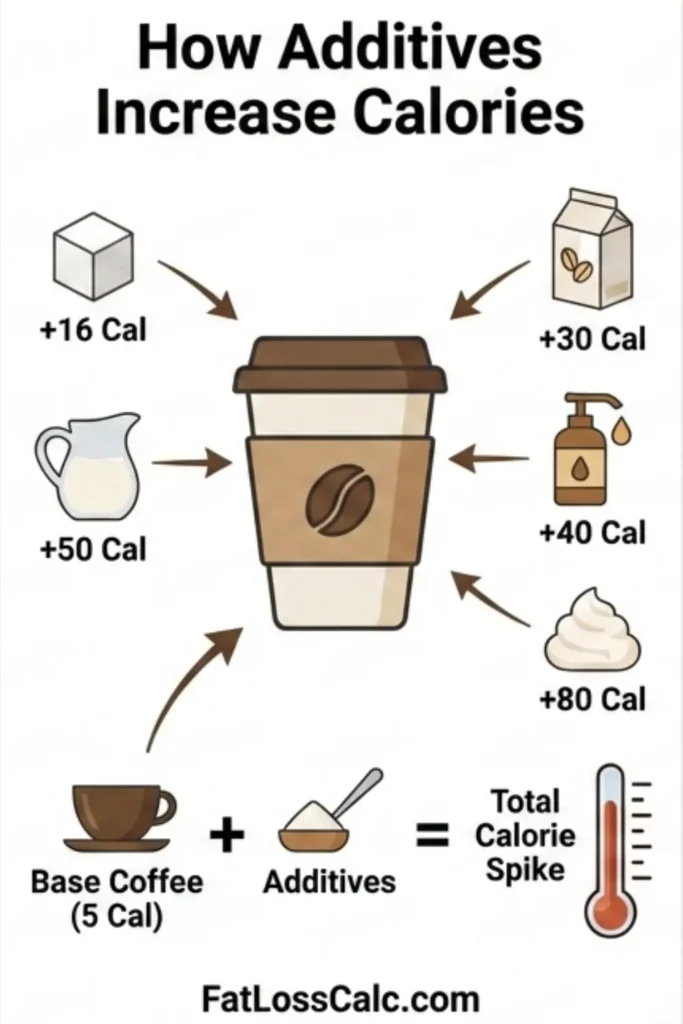
Your choice at the condiment bar can make or break your calorie budget. Here’s a quick guide to common add-ins:
- Sugar (1 tsp / 1 packet): 16 calories
- Half-and-Half (1 tbsp): 20 calories
- Whole Milk (1 tbsp): 9 calories
- 2% Milk (1 tbsp): 7 calories
- Skim/Fat-Free Milk (1 tbsp): 5 calories
- Unsweetened Almond Milk (1 tbsp): 4 calories
- French Vanilla Creamer (1 tbsp): 35+ calories (often contains sugar and oil)
- Whipped Cream (a dollop): 50-100 calories
Pro Tip
If you need milk, choose skim or a plant-based option like unsweetened almond milk. For sweetness, try a zero-calorie sweetener like stevia, or gradually reduce the amount of sugar you use each week to let your taste buds adjust.
Which Is the Best Coffee Drink with the Lowest Calories?
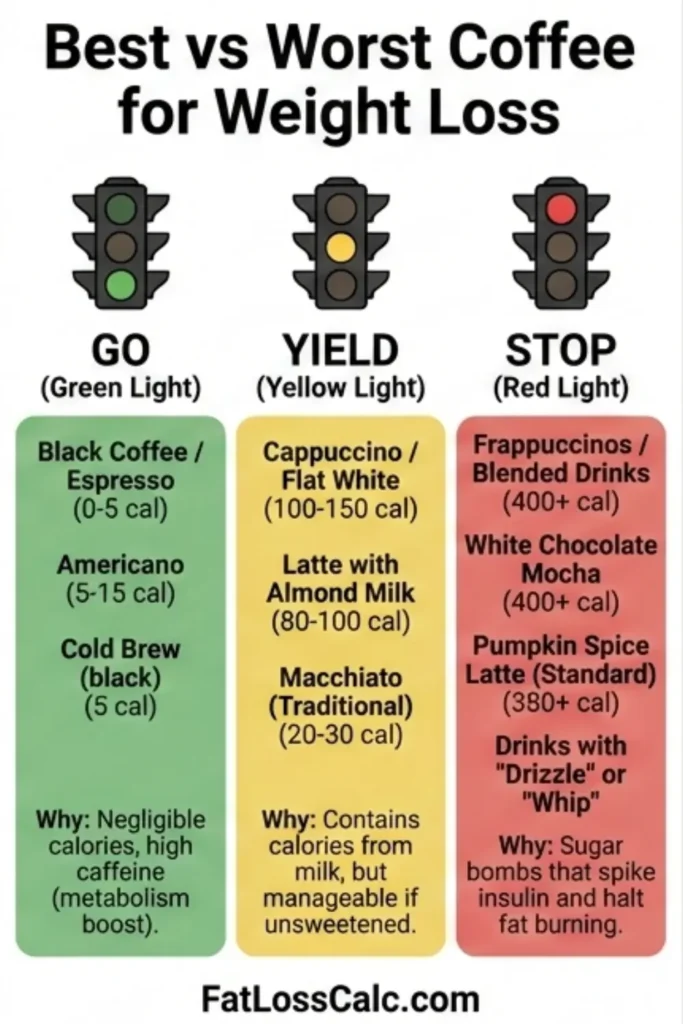
The winner, by a landslide, is plain black coffee or espresso. If you find black coffee too bitter, try these expert-approved strategies for a better-tasting, low-calorie cup:
- Choose High-Quality, Light-to-Medium Roast Beans: Lighter roasts often have brighter, more naturally sweet and complex flavors than dark roasts, which can taste charred and bitter.
- Experiment with Brew Methods: Cold brewing drastically reduces bitterness and acidity, resulting in a naturally smoother drink that needs little to no addition.
- Add a Pinch of Salt or Cinnamon: A tiny pinch of salt can neutralize perceived bitterness without adding calories. Cinnamon adds warming flavor and may help stabilize blood sugar.
If you crave a milkier drink, opt for:
- A Caffè Americano (espresso + hot water): ~15 calories for a Grande.
A “Skinny” Latte or Cappuccino: Always request it with non-fat or almond milk and sugar free syrup if needed. A Tall non-fat cappuccino can be under 70 calories.
The Health and Weight Loss Perks of Black Coffee
Beyond being low-calorie, black coffee offers benefits that can support your goals:
- Metabolic Boost: The caffeine in coffee is a stimulant that can temporarily increase your metabolic rate and enhance fat burning, especially when consumed before exercise.
- Appetite Control: For some people, coffee can temporarily suppress appetite, helping to curb mindless snacking.
- Nutrient-Rich: It contains small amounts of vital nutrients like magnesium and potassium.
Actionable Advice
Try using your morning coffee as a tool. Drink a cup of black coffee before your morning workout for an energy boost, or in the mid-afternoon as a satisfying, calorie-free ritual to help you push past the urge to snack.
Your Coffee Action Plan
- Audit Your Habit: For one week, write down exactly what’s in your coffee. Be honest about the number of creams and sugars.
- Downsize and Simplify: If you love specialty drinks, make them a “Tall” treat, not a daily “Venti” habit. Ask for half the usual pumps of syrup.
- Become a Home Barista: The most control (and savings) happens at home. Invest in a good grinder and try brewing your own. You might be surprised by how sweet a quality light roast can taste on its own.
- Track for Success: Understanding your total daily energy balance is key. Use our Calorie Deficit Calculator to see how your coffee fits into your personal budget.
Also Read: How To Create Macro Meal Plans Using Chatgpt
Final Takeaway
Coffee itself — brewed, black, or espresso — is almost zero calories. But once you add milk, sugar, syrups, or toppings, calories can explode. For weight loss, stick to simple, low-calorie choices, and always be mindful of additives.
With the right approach, coffee can be a healthy, satisfying part of your day without sabotaging your calorie goals.