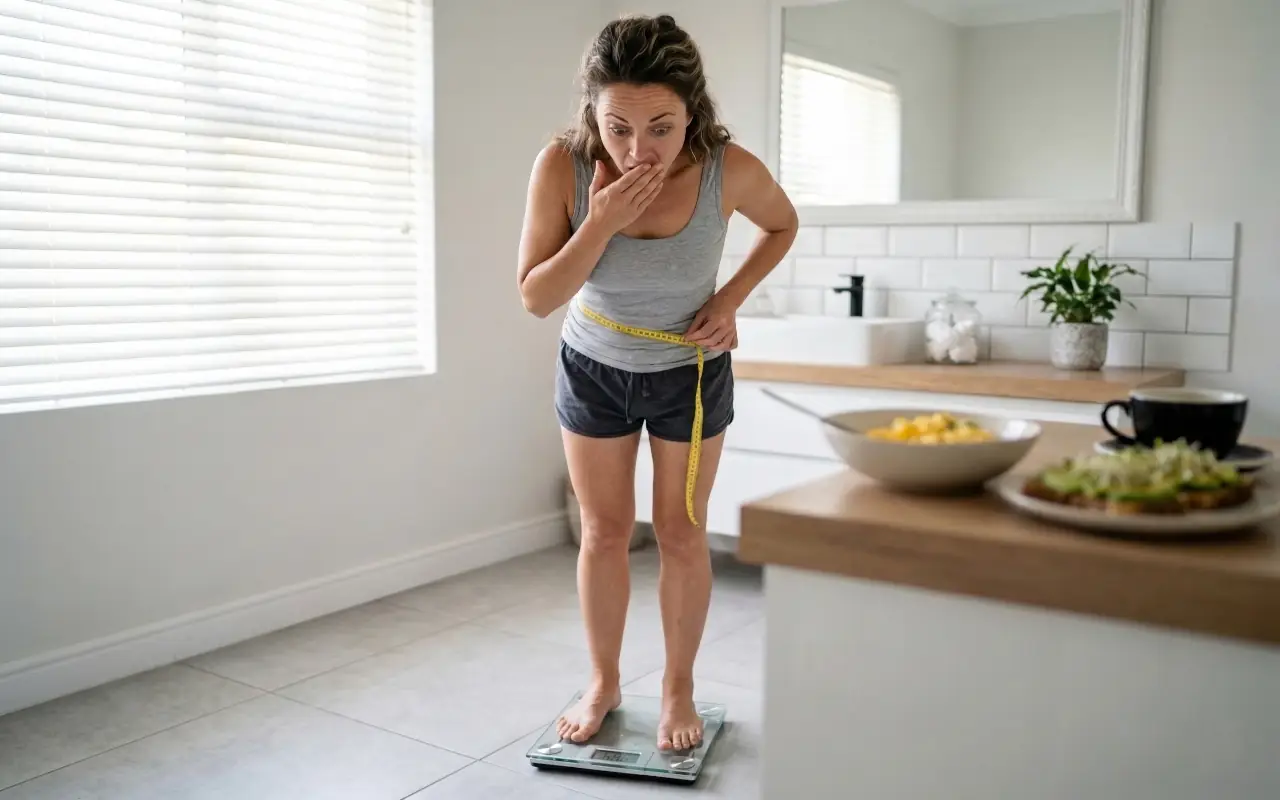
Many people assume the worst when the scale suddenly jumps two or three pounds overnight. I see this reaction constantly when someone starts tracking their weight. They step on the scale after a salty dinner, a tough workout, or a high-carb weekend and immediately think they gained fat.
In reality, sudden weight fluctuation is almost never fat gain. In most cases, it’s water retention.
The human body stores and releases fluid constantly. Sodium intake, hormones, medication, exercise, and carbohydrate intake can all temporarily increase water weight. These shifts can easily move the scale by one to three pounds within a day or two — something that would be nearly impossible with body fat alone.
Understanding this difference is important because reacting incorrectly can create unnecessary stress, especially if you’re trying to determine whether a sudden scale increase is realistic based on your daily calorie needs. I’ve seen people drastically cut calories or eliminate entire food groups simply because of short-term scale changes that were actually caused by water retention.
Instead of reacting to daily numbers, it helps to understand why water retention happens, how long it lasts, and how to interpret normal weight fluctuation without panic.
Also Read: How to Break a Weight Loss Plateau (Without Extreme Dieting)
Why Can You Gain Weight Overnight?
It is extremely difficult to gain true body fat overnight. Gaining one pound of fat generally requires roughly 3,500 extra calories above your daily energy needs.
However, the scale can easily increase overnight because of water retention caused by:
These changes temporarily increase water weight, which explains why the scale may rise even when fat gain has not occurred.
Why Does Body Weight Fluctuate So Much?
Daily weight fluctuation is usually caused by changes in water balance rather than body fat. The most common reasons include:
- Sodium intake
- Carbohydrate intake
- Hormonal changes
- Exercise-related inflammation
- Medications
- Hydration levels
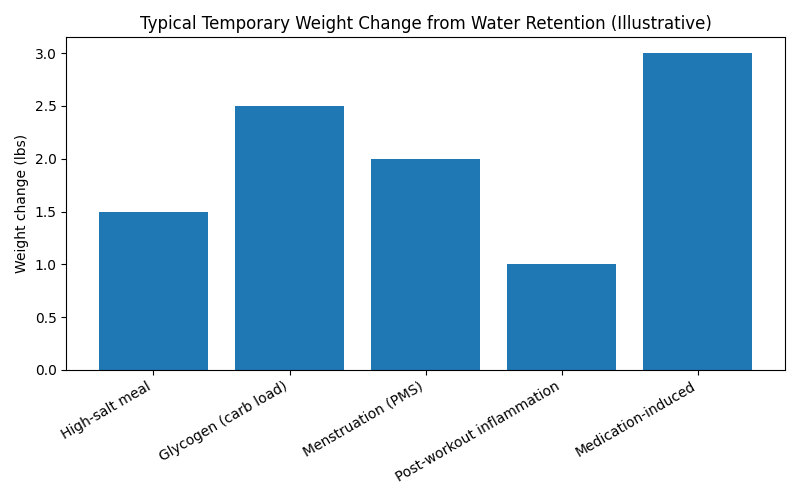
These factors can temporarily change water weight by 1–3 pounds within a day or two.
The chart below shows how different factors can temporarily increase water weight.
What Is Water Retention (And Why It Looks Like Fat)?
Water retention — clinically called edema — is extra fluid trapped in your body’s tissues. It can show up as general puffiness, swollen ankles, a bloated belly, or simply a sudden jump on the bathroom scale. Edema is common and often temporary; it can be caused by diet, hormones, medication, exercise, or medical conditions.
Important: gaining 1–3 pounds overnight is far easier with fluids than with fat. To gain one pound of fat you’d need roughly 3,500 extra calories — so most fast scale swings are water, not fat.
In practice, water retention is the most common reason for short-term weight fluctuation. True fat gain happens slowly because the body requires a sustained calorie surplus over time. Research often cites that gaining one pound of body fat typically requires roughly 3,500 excess calories, which means large overnight increases on the scale are almost always related to water weight rather than fat mass. Understanding this distinction helps people avoid overreacting to temporary changes.
What Causes Water Retention and Sudden Weight Fluctuation?
Water retention usually happens when the body temporarily holds onto extra fluid. In most healthy people, this occurs because of changes in sodium intake, hormones, exercise, medications, or carbohydrate storage.
These factors influence how the kidneys regulate sodium and water balance, which can cause short-term weight fluctuation on the scale.
Some of the most common causes include:
- High sodium meals
- Starting or changing medications
- Hormonal changes (such as menstruation)
- Intense exercise and muscle inflammation
- Large increases in carbohydrate intake
- Sudden changes in fiber intake
These causes are typically temporary and resolve once the body rebalances fluid levels. The key is recognizing that most short-term scale increases are water weight rather than body fat gain.
Common Causes of Water Weight
Sudden weight fluctuations can be frustrating, especially when the scale jumps overnight despite sticking to your diet or workout plan. In many cases, this rapid change isn’t body fat — it’s water retention, which can temporarily increase your weight by a few pounds. Understanding the most common triggers of water weight, from salty foods to hormonal changes, can help you stay calm and focus on long-term progress.
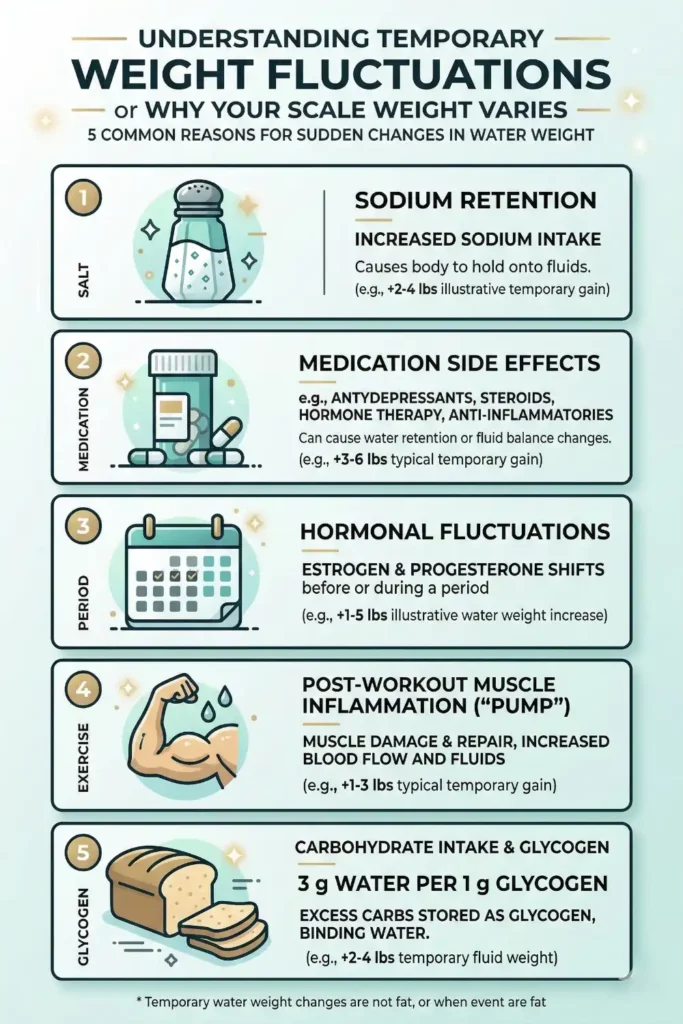
If your weight fluctuates frequently, use our TDEE Calculator to determine whether changes are due to calories or temporary water weight.
1) Salt (Sodium) — The Biggest and Most Immediate Trigger
Eating a high-salt meal pulls fluid into and around cells to balance sodium. Processed and restaurant foods are the common culprits. Public health guidelines recommend keeping sodium intake under 2,300 mg per day, with many adults benefiting from closer to 1,500 mg daily to reduce blood pressure, according to the U.S. Dietary Guidelines for Americans.
When sodium intake suddenly increases, the body often retains extra water to maintain fluid balance, which can temporarily increase water weight. Reducing sodium and drinking normally helps the kidneys flush extra sodium and water.
How long does it last? Typically, a couple of days of normal sodium intake will clear most of the excess fluid, but timing varies by person and activity (sweating speeds removal).
The kidneys regulate sodium and fluid balance continuously, which is why sudden increases in salt intake often cause temporary water retention until the body restores equilibrium.
2) Medication-Induced Water Retention — A Surprisingly Common Cause
Many medicines can cause fluid retention via different mechanisms: some increase vascular leakage, others cause the kidneys to retain sodium, and some change hormone balance. Drug classes commonly linked with edema include:
- NSAIDs (e.g., ibuprofen, naproxen, diclofenac)
- Calcium-channel blockers (e.g., amlodipine, nifedipine)
- Thiazolidinediones (TZDs) for diabetes (e.g., pioglitazone)
- Corticosteroids (e.g., prednisone)
- Some antidepressants / antipsychotics (varies by drug)
- Insulin or insulin-promoting drugs (can affect renal sodium handling)
- Hormone therapy / oral contraceptives (estrogen can alter fluid balance)
- Pregabalin / gabapentin (reported with peripheral edema)
- NSAID-class COX-2 inhibitors (e.g., celecoxib)
- Certain diabetes drugs and vasodilators (class-specific examples exist)
Reviews of drug-induced edema show that several medication classes can influence sodium handling, vascular permeability, or hormone balance, which can lead to fluid accumulation.
How Long Do You Retain Water After Taking Medications?
There’s no single answer — many drug-related edemas improve within days to a few weeks after stopping or changing the medication, but longer courses or certain drugs can prolong swelling. Resolution depends on the drug’s mechanism, dose, duration, and individual factors. For any medication you suspect, talk to the prescriber before stopping it.
3) Menstruation and the Monthlies — A Predictable Pattern For Many People
Hormone changes across the menstrual cycle commonly cause fluid retention and bloating. Many people notice symptoms 1–2 days before their period and sometimes for several days into the period; for some it can last up to about a week or more depending on individual sensitivity. Keeping a cycle-weight journal can help you spot a personal pattern so your weigh-ins don’t become discouraging during that window.
How Long Do You Retain Water During Your Period?
Usually, the worst of the bloating is in the days just before and at the start of bleeding; many people see the extra water drop off within several days after the period begins.
4) Weight Training & Exercise — The “Pump” And Recovery Swelling
After a tough workout, muscles temporarily hold more fluid for repair and glycogen replenishment; this is why you might look or weigh a bit heavier after heavy training. Muscle inflammation and repair can add fluid for 24–72 hours (sometimes a little longer if workouts are extreme). Also, when you increase exercise suddenly, blood volume and tissue water can rise until your body adapts. Regular training reduces chronic inflammation, but short-term post-exercise water gains are normal. (Also read on glycogen below — it’s a big factor.)
This relationship between carbohydrates and water often creates confusion for people tracking weight. Increasing carbohydrate intake can temporarily increase water weight as glycogen stores refill, but this does not mean fat gain occurred. In fact, glycogen storage is important for exercise performance and energy. The tradeoff is simply that higher carbohydrate intake may cause short-term weight fluctuation on the scale.
Sports nutrition research has consistently shown that each gram of glycogen stored in muscle binds roughly three grams of water, which explains why scale changes can occur quickly when carbohydrate intake changes.
How Long Do You Retain Water Post-Workout?
In most cases, weigh-ins taken the next morning are fine; if you’re very sore it can take up to 2–3 days for inflammation-related water to subside.
5) Refined Carbs, Insulin and Fiber — The Carbohydrate–Water Link
Glycogen (the storage form of carbohydrate) is stored with water — classically about 3 grams of water for every 1 gram of glycogen.
The chart below illustrates how glycogen storage increases associated water weight after higher carbohydrate intake.
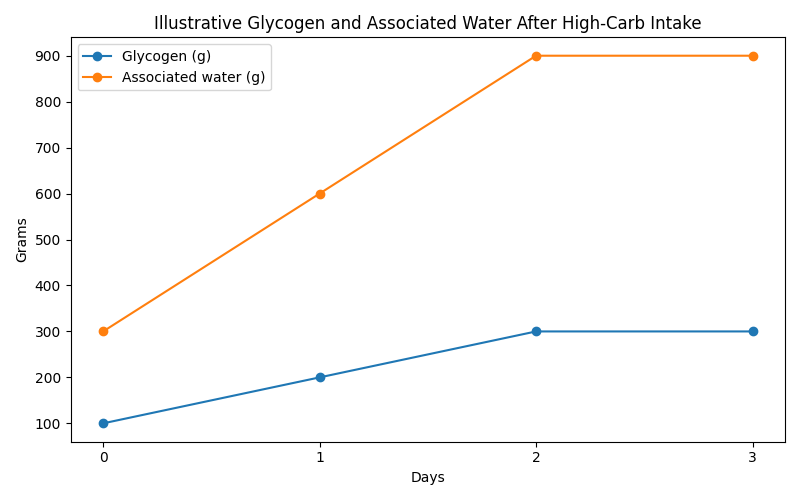
People who track carbohydrate intake using a macro calculator often notice these temporary shifts in water weight when glycogen stores increase. So a high-carb meal that tops up glycogen stores can temporarily add a noticeable amount of water weight. At the same time, high refined-carb meals spike insulin, and insulin promotes renal sodium reabsorption — meaning carbs can indirectly encourage water retention.
Fiber note: Soluble fiber absorbs water in the gut to form a gel — this can cause fuller, bulkier stools and transient bloating if you increase fiber quickly without drinking enough. Fiber itself isn’t “bad” — it’s helpful — but pair fiber with fluids.
How To Tell Water Weight from Fat
How To Tell If Weight Gain Is Water Retention
Signs your weight gain is water weight rather than fat include:
- Weight increased within 24–48 hours
- You ate salty or high-carb foods
- Your muscles are sore from exercise
- You notice swelling in fingers or ankles
- Your weight returns to normal within a few days
Fat gain happens gradually over weeks, not overnight.
While many factors can influence fluid balance, several causes appear most frequently in everyday life.
Common Mistakes People Make with Water Retention
Understanding water retention is helpful, but how people react to it matters just as much. Several common mistakes can make normal weight fluctuation feel more alarming than it actually is.
Some people assume water retention means their diet has stopped working, when in reality short-term water weight can temporarily mask fat loss and create the illusion of a weight loss plateau.
Symptoms of Water Retention
Water retention often causes noticeable physical symptoms in addition to weight fluctuation on the scale.
Common symptoms include:
- Swelling in the ankles, feet, or fingers
- Puffy face or bloated abdomen
- Tight rings or shoes
- Skin that briefly holds an indentation when pressed
- Sudden daily weight fluctuation
These symptoms usually resolve as fluid balance returns to normal once sodium levels, hydration, and hormone levels stabilize.
How To Prevent (and Treat) Water Retention
- Manage salt intelligently: Aim to keep daily sodium near the dietary guideline (generally <2,300 mg; many benefit from ~1,500 mg). Read labels and cut back on processed, canned, and restaurant foods.
- Drink enough water (yes — really): Proper hydration helps the kidneys flush excess sodium and stabilizes fluid balance. Sip consistently through the day; if you exercise heavily or sweat a lot, replace fluids appropriately.
- Move and sweat: Moderate exercise helps remove sodium via sweat and reduces transient fluid pooling. Also: avoid long periods of sitting or standing.
- Watch carbohydrates strategically: If you’re tracking weight closely, realize high-carb days can temporarily add glycogen-bound water. If you need reliable weigh-ins, weigh at the same time (e.g., first thing in the morning after peeing, before breakfast).
- Stabilize fiber intake gradually: Increase fiber slowly and drink enough fluid so it doesn’t trap water in the gut and cause bloating.
- Check medications with your clinician: If swelling starts after a new drug, consult the prescriber — there may be alternatives or dose adjustments. Never stop prescription meds without guidance.
- Other practical tips: Elevate legs if swollen. Wear compression stockings when appropriate. Track weekly averages instead of daily scale swings. Keep a “trigger log”: food, medication, workouts, and menstrual cycle notes — over 6–8 weeks this reveals patterns.
Why Our Approach Works (and Why It’s Better Than Panic-Weighing)
I coach people to treat scale data like trends, not headlines. We combine education (why water moves), tracking (consistent weigh-ins and a simple symptom log), and actionable tactics (sodium control, hydration, movement, med review). That combination reduces stress, prevents knee-jerk dieting, and keeps progress steady.
In my experience working with people tracking weight loss, understanding water retention often reduces unnecessary dieting adjustments and helps people focus on longer-term progress rather than daily scale noise.
Quick Action Plan (What to Do Right Now When the Scale Jumps)
- Don’t panic — most jumps are water. Wait 48–72 hours and check trend.
- Check yesterday’s meals: high-sodium or lots of refined carbs?
- Hydrate, move (30–60 minutes light activity), and weigh in under the same conditions tomorrow.
- If swelling is painful, one-sided, or persistent for >2 weeks, seek medical review (rule out heart/kidney/liver causes).
If your goal is fat loss, it’s helpful to track longer-term trends rather than daily changes. One practical way to estimate whether weight gain is realistically possible is to compare your calorie intake with your daily energy needs. Tools such as a TDEE calculator to estimate your daily calorie needs can help determine whether recent eating patterns could realistically lead to fat gain or if the scale change is more likely due to temporary water retention.