Macro Calculations for Pregnant or Breastfeeding Women help guide healthy weight gain, energy levels, and milk production. Learn safe calorie adjustments, balanced macro ranges, and when to adapt your intake for pregnancy and postpartum recovery.
I am Currently
Age
Pre-Pregnancy Weight
Height
Activity Level
Many women look for structured guidance during pregnancy and breastfeeding because they want clarity — not extremes.
Macro Calculations for Pregnant or Breastfeeding Women estimate daily calorie, protein, carbohydrate, and fat needs adjusted for trimester or lactation status. Most women require 340–450 extra calories during pregnancy and 450–500 during exclusive breastfeeding, with balanced macro distribution to support maternal and infant health.
I’ve seen women swing between two extremes. Some under-eat because they’re afraid of gaining “too much.” Others increase calories aggressively and feel sluggish, bloated, and out of control. Breastfeeding adds another layer of confusion. Many expect fat loss to happen automatically. For some women it does. For others, it doesn’t — and that’s normal.
Your body is prioritizing growth, recovery, and milk production before aesthetics.
Energy needs shift quickly across trimesters and again postpartum. Appetite fluctuates. Sleep affects hunger cues. What worked before pregnancy often stops working entirely. Macro calculations can help — but only as flexible guidelines. They are starting points, not guarantees.
If you want a general framework for calculating daily protein, carbohydrates, and fats outside pregnancy-specific adjustments, you can estimate targets using our Macro Calculator.
The goal during pregnancy and breastfeeding isn’t perfect numbers. It’s adequate nourishment, steady energy, and gradual adjustments based on feedback. Fat loss, if it happens, should be secondary to recovery and baby health — especially in the early postpartum months.
For women focusing on gradual fat loss while preserving muscle after pregnancy recovery, the Body Recomposition Calculator can help estimate balanced calorie and macro targets.
Related Fat Loss Calculators
These calculators help estimate calorie needs, macronutrients, and body composition when planning nutrition strategies for different life stages. Many people start by estimating daily calorie expenditure with the TDEE Calculator, then determine a sustainable calorie reduction using the Calorie Deficit Calculator. Tools like the Macro Calculator and Body Recomposition Calculator help structure protein, carbohydrate, and fat intake based on specific goals, while the Body Fat Percentage Calculator and Ideal Body Weight Calculator help provide additional insight into body composition and healthy weight ranges.
- TDEE Calculator
- Calorie Deficit Calculator
- Macro Calculator
- Body Recomposition Calculator
- Body Fat Percentage Calculator
- Ideal Body Weight Calculator
What Are Macro Calculations for Pregnant or Breastfeeding Women?
Macro Calculations for Pregnant or Breastfeeding Women are structured estimates of daily protein, carbohydrate, fat, and calorie needs adjusted for pregnancy trimester or lactation status. These calculations account for increased energy expenditure, fetal development, milk production, and maternal recovery.
What Should My Macros Be When Pregnant?
Quick Macro Guidelines During Pregnancy
- Protein: 1.1–1.3 g/kg bodyweight (20–30% of calories)
- Carbohydrates: 45–55% of calories
- Fats: 25–35% of calories
- Additional calories: +340 (2nd trimester), +450 (3rd trimester)
These are general starting ranges and should be adjusted with medical guidance.
Proper macronutrient distribution supports fetal development, tissue growth, and maternal energy needs. For most uncomplicated pregnancies, general starting ranges look like this:
- Protein: 20–30% of total calories (about 1.1–1.3 g/kg of pre-pregnancy body weight daily)
- Carbohydrates: 45–55% of total calories (emphasize fiber-rich sources)
- Fats: 25–35% of total calories (include omega-3 fats such as DHA)
Pregnancy Macro Overview
| Macronutrient | Recommended Range | Why It Matters During Pregnancy |
| Protein | 1.1–1.3 g/kg bodyweight (20–30%) | Supports fetal tissue growth and maternal blood expansion |
| Carbohydrates | 45–55% of total calories | Primary energy source for mother and baby |
| Fats | 25–35% of total calories | Supports hormone production and DHA intake |
These are not prescriptions. Needs vary based on:
- Pre-pregnancy BMI
- Multiples (twins or more)
- Gestational diabetes
- Activity level
- Medical history
Think of these ranges as a baseline. Your OB-GYN or dietitian should individualize them if complications arise.
A macro calculator for pregnant women can provide a helpful starting estimate based on trimester and activity level. However, calculations should be adjusted based on real-world feedback such as energy levels, digestion, and rate of weight gain — not followed rigidly.
If you follow a very low-carbohydrate diet during pregnancy planning or postpartum phases, you can estimate ketogenic macro targets using our Keto Macro Calculator.
What Is Appropriate Weight Gain During Pregnancy?
The American College of Obstetricians and Gynecologists (ACOG) recommends:
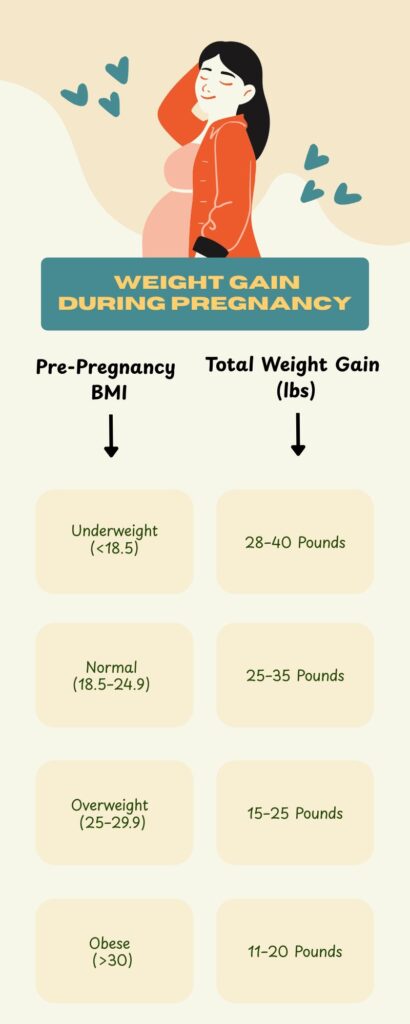
| Pre-Pregnancy BMI | Total Weight Gain (lbs) | Rate (2nd/3rd Trimester) |
|---|---|---|
| Underweight (<18.5) | 28–40 | 1–1.3 lbs/week |
| Normal (18.5–24.9) | 25–35 | 0.8–1 lb/week |
| Overweight (25–29.9) | 15–25 | 0.5–0.7 lbs/week |
| Obese (>30) | 11–20 | 0.4–0.6 lbs/week |
Excessive gain increases risks of gestational diabetes and hypertension, while insufficient gain may lead to low birth weight.
These ranges are based on population data. Individual targets may differ depending on metabolic health, prior pregnancy history, or physician recommendations. Regular prenatal visits should guide adjustments rather than relying solely on macro percentages.
Should I Measure Calories While Pregnant?
Calorie equations like Mifflin-St Jeor estimate baseline energy needs. You can estimate your daily energy expenditure using our TDEE Calculator before adjusting calories for pregnancy or breastfeeding, but pregnancy metabolism can vary 10–20% beyond formulas.
General guidance from ACOG suggests:
- First Trimester: No additional calories are typically required beyond maintenance.
- Second Trimester: Add ~340 calories per day.
- Third Trimester: Add ~450 calories per day.
These are population averages. Some women feel best slightly above or below those increases depending on activity, appetite, and weight gain trends. Use equations as reference points, not rigid targets.
While calorie equations provide estimates, actual energy needs during pregnancy and breastfeeding can vary significantly based on metabolic rate, body composition, and feeding frequency.
How Much Protein Is Too Much During Pregnancy?
Protein needs increase during pregnancy, but more is not automatically better.
Intakes significantly above 2.2–2.5 g/kg/day generally provide no additional benefit for fetal development and may displace needed carbohydrates and fats. Extremely high intakes should only occur under medical supervision.
If protein intake feels excessive, common signs may include digestive discomfort, reduced appetite for other foods, or difficulty staying hydrated.
Focus on balanced meals with whole-food protein sources rather than relying heavily on supplements unless your provider recommends them.
Common Mistakes Women Make With Pregnancy & Breastfeeding Macros
Even with good intentions, a few patterns show up repeatedly:
- Under-eating in the first trimester
Nausea and food aversions often lead to unintentionally low calorie and protein intake, which can worsen fatigue. - Over-focusing on protein
While protein needs increase, excessive intake at the expense of carbs or fats can affect digestion, hydration, and overall energy. - Fear of carbohydrates
Cutting carbs too aggressively can increase stress hormones and reduce energy, especially during breastfeeding. - Tracking too rigidly
Exact macro tracking can become mentally exhausting during pregnancy and postpartum, sometimes doing more harm than good. - Expecting fat loss while breastfeeding
Some women lose fat easily while nursing; others don’t until weaning. Both are normal.
What Should My Macros Be When Breastfeeding?
Breastfeeding Macros at a Glance
- Additional calories: 450–500 per day (exclusive breastfeeding)
- Protein: 1.5–2 g/kg bodyweight
- Carbohydrates: 40–50% of calories
- Fats: 30–35% of calories
- Hydration: ~3–3.8 liters daily
Breastfeeding increases energy expenditure and may burn approximately 300–500 additional calories per day, depending on body size and feeding frequency. To maintain milk production and maternal energy, many women require roughly 450–500 additional calories daily.
General starting ranges:
- Protein: 1.5–2 g/kg/day
- Carbohydrates: 40–50% of total calories
- Fats: 30–35%, including DHA-rich sources
Breastfeeding Macro Overview
| Macronutrient | General Range | Why It Matters During Breastfeeding |
| Protein | 1.5–2 g/kg bodyweight | Supports milk production and maternal recovery |
| Carbohydrates | 40–50% of total calories | Maintains energy and supports lactation demands |
| Fats | 30–35% of total calories | Provides essential fatty acids for infant brain development |
Exclusive breastfeeding typically requires closer to 450–500 additional calories per day. Partial breastfeeding may require approximately 250–350 extra calories, depending on how frequently the baby feeds and whether formula is used. Individual needs vary, so adjustments should be based on maternal energy levels and infant growth patterns.
However, milk production is hormonally regulated. Calorie intake alone does not guarantee supply, and modest calorie adjustments do not automatically reduce it.
If you experience a sudden or persistent drop in milk supply, significant fatigue, dizziness, or unintended rapid weight loss, consult your healthcare provider or lactation consultant promptly.
Nutrition is one piece of the equation — not the only one.
Hydration supports comfort and energy, but forcing excessive fluids beyond thirst is not necessary for most women.
Most breastfeeding women benefit from roughly 3–3.8 liters of total daily fluids from beverages and food combined, though individual needs vary based on body size and climate.
A breastfeeding macro calculator can estimate calorie and protein needs, but milk production is primarily hormonally driven. Increasing calories alone does not guarantee supply, and modest calorie adjustments do not automatically reduce it. Sudden or persistent drops in milk supply should always be evaluated by a healthcare provider or lactation consultant.
Also Check: High Protein Weight Loss Calculator
What Foods Should I Eat?
Prioritize nutrient-dense, whole foods:
| Category | Top Choices | Key Nutrients |
|---|---|---|
| Proteins | Salmon, lentils, chicken, cottage cheese | DHA, iron, choline |
| Carbohydrates | Quinoa, sweet potatoes, berries, oats | Fiber, folate, vitamin C |
| Fats | Avocados, walnuts, olive oil, chia seeds | Omega-3s, vitamin E |
| Dairy | Greek yogurt, kefir, fortified plant milk | Calcium, vitamin D, probiotics |
Avoid: High-mercury fish, unpasteurized dairy, and excess caffeine (>200mg/day).
Key Micronutrients to Prioritize During Pregnancy and Breastfeeding
While macro calculations focus on protein, carbohydrates, and fats, certain micronutrients require special attention:
- Folate (600 mcg/day during pregnancy): Supports neural tube development.
- Iron (27 mg/day during pregnancy): Supports increased blood volume and prevents anemia.
- Calcium (1,000 mg/day): Maintains maternal bone health and supports fetal skeletal growth.
- DHA (200–300 mg/day): Supports fetal brain and eye development.
Most healthcare providers recommend continuing a prenatal vitamin throughout pregnancy and, in many cases, during breastfeeding to help meet increased micronutrient needs. Supplements should complement — not replace — nutrient-dense food choices. Macro tracking should never replace attention to these core nutrients.
If you want a clearer picture of body composition before pregnancy or during postpartum recovery, you can estimate it using our Body Fat Percentage Calculator.
Signs Your Intake Is Likely Adequate
During pregnancy, signs that nutrition is likely sufficient include:
• Weight gain tracking within recommended BMI ranges
• Stable prenatal lab values (iron levels, blood pressure, glucose)
• Consistent daily energy
During breastfeeding, positive signs include:
• Baby gaining weight appropriately
• Stable milk supply without sudden drops
• No persistent dizziness, weakness, or extreme fatigue
If these markers are not present, consult your OB-GYN, pediatrician, or registered dietitian before making significant calorie reductions.
Tradeoffs & Limitations of Macro Tracking
Macro calculations are estimates — not guarantees.
Pros
Cons
For many women, a range-based approach works better than strict numbers, especially during the first trimester or early postpartum period.
When Macro Tracking May Not Be Appropriate
Macro tracking may not be ideal if:
- You have a history of disordered eating
- You feel anxious around food logging
- You are experiencing severe nausea
- Your provider has recommended intuitive or structured meal-based plans
In these cases, focusing on meal consistency and food quality may be more beneficial than numerical targets.
Adjustment & Feedback Guidance
Instead of chasing perfect macros, use feedback markers and adjust gradually:
Every 2–3 weeks, reassess if you notice:
- Persistent fatigue
- Poor workout recovery
- Hunger between meals
- Changes in milk supply
- Faster or slower weight gain than expected
- Baby not gaining weight as expected
If fatigue is severe, dizziness occurs, infant weight gain slows unexpectedly, or weight changes are rapid and unintentional, medical evaluation is more appropriate than further calorie reduction. Nutrition adjustments should support recovery — not override clinical guidance.
Simple adjustments:
- Add 150–250 calories/day if energy or milk supply drops
- Increase carbs before increasing protein if fatigue is high
- Prioritize hydration before changing macros
If symptoms persist beyond a few weeks, consult your OB-GYN or a registered dietitian.
Practical Next Steps
- Start with macro ranges, not fixed numbers
- Prioritize protein, then carbohydrates, then fats
- Eat consistently before worrying about optimization
- Reassess intake each trimester and postpartum phase
- Use calculators as reference tools — not performance goals
Key Takeaways
- Personalization Matters: Use trimester-specific macro calculations to meet evolving needs.
- Quality Over Quantity: Prioritize whole foods rich in iron, folate, and omega-3s.
- Monitor Progress: Track weight gain and adjust intake with medical guidance.
Conclusion
Macro Calculations for Pregnant or Breastfeeding Women can provide helpful structure during a time of rapid physiological change. While tools like a Macro Calculator for Pregnant Women or a Breastfeeding Macro Calculator may offer useful starting estimates, they cannot replace medical guidance or individualized care.
The most important priorities remain adequate nourishment, steady energy, appropriate weight gain, and sustainable recovery. Numbers can guide you — but your body’s feedback and your healthcare provider’s oversight matter more than precision.
Related Nutrition Calculators
Nutrition planning works best when calorie intake, macronutrient targets, and body composition metrics are considered together. The TDEE Calculator estimates daily calorie expenditure, while the Calorie Deficit Calculator helps determine a sustainable fat-loss target when appropriate. Tools like the Macro Calculator, Keto Macro Calculator, and Body Recomposition Calculator help structure protein, carbohydrate, and fat intake using different dietary strategies.
Popular Fat Loss Calculators
- TDEE Calculator
- Calorie Deficit Calculator
- Macro Calculator
- Body Recomposition Calculator
- Body Fat Percentage Calculator
- Ideal Body Weight Calculator
- Intermittent Fasting Calculator
Frequently Asked Questions

View Sources
- American College of Obstetricians and Gynecologists (ACOG) – Pregnancy & Lactation Nutrition Guidelines. Link.
- Centers for Disease Control and Prevention (CDC) – Weight Gain During Pregnancy
- National Institutes of Health (NIH) – Maternal Nutrition Research