Most people start a fat loss phase thinking the answer is simple. Eat less, lose weight, done.
Then things get confusing fast.
One person says you should cut aggressively. Another says you should eat at maintenance and focus on “body recomposition.” Then you look in the mirror after weeks of dieting and realize the scale dropped, but you still don’t look the way you expected.
That’s usually the point where people start mixing up fat loss with physique improvement.
I’ve seen this happen constantly with beginners. They assume losing weight automatically means looking leaner or more athletic. Sometimes it does. Sometimes it just makes you smaller, flatter, and tired.
That’s why the difference between body recomposition vs cutting actually matters.
Both approaches can work. But they work best for different people, different timelines, and different starting points. If you choose the wrong one, progress feels frustrating even when you’re technically “doing everything right.”
This article will help you understand what each approach actually does, who it works best for, and how to decide which one makes sense for your body and goals.
Also Read: How to Quit Soda Without Feeling Miserable
Body Recomposition vs Cutting: Quick Answer
Body recomposition focuses on losing fat while maintaining or building muscle at the same time. Cutting focuses mainly on reducing body fat through a calorie deficit, usually with faster scale weight loss.
For beginners, people returning to training, or individuals with higher body fat, body recomposition is often the more sustainable option. For experienced lifters trying to get lean quickly for an event, competition, or short-term goal, cutting is usually faster.
For most beginners, body recomposition is usually the better starting point because it focuses on sustainability, muscle retention, and long-term progress instead of rapid weight loss alone.
The biggest difference is that recomp prioritizes improving body composition and muscle retention, while cutting prioritizes rapid fat loss and lower body weight.
| Goal | Better Option |
| Faster fat loss | Cutting |
| Building muscle while losing fat | Body recomposition |
| Beginner-friendly | Body recomposition |
| Competition prep | Cutting |
| Long-term sustainability | Body recomposition |
What Is Body Recomposition?
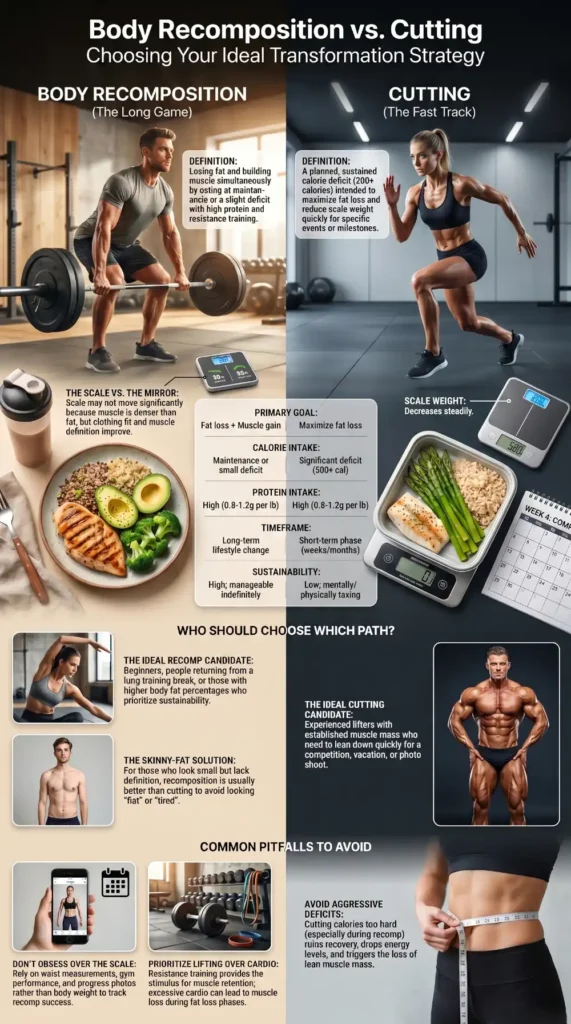
Body recomposition means losing fat while building or maintaining muscle at the same time. Many people shorten body recomposition to “recomp” in fitness discussions and workout programs. Instead of only focusing on body weight, the goal is improving how your body actually looks and performs.
A lot of people assume weight loss automatically means a better physique. This is especially common with “skinny fat” body types where someone appears relatively small overall but still carries noticeable body fat and lacks muscle definition.
That’s not always true. You can lose scale weight and still feel soft, weak, or unhappy with how you look. Recomp focuses more on changing body shape than simply making the number on the scale smaller.
A simple way to think about it is this: if you were to only track scale weight, you might miss the incredible progress happening beneath the surface. With body recomposition, the scale might not move dramatically, but your body transforms in profound ways:
A lot of people notice the changes in small ways first. Their clothes fit differently even though the scale barely moves. Their waist gets smaller. Their shoulders and arms start looking more defined. Strength in the gym improves.
Energy usually improves too. Building muscle can also help support a healthier metabolism over time because muscle tissue requires more energy than fat tissue.
That’s why body recomposition can feel strange at first. You may not lose a huge amount of scale weight, but your body can still look dramatically different over time.
The scale can be misleading because it does not distinguish between fat loss and muscle gain. Since muscle is denser than fat, it takes up less space. This means you can appear smaller and more toned without dramatic changes on the scale. I’ve had clients who dropped three clothing sizes while losing only five pounds on the scale—that’s the power of recomposition!
How Does Body Recomposition Work?
Body recomposition works by gradually reducing body fat while maintaining or building muscle through consistent training, nutrition, recovery, and adequate protein intake.
In real life, recomp usually works best when someone stops chasing extremes. Instead of crash dieting, they eat enough to recover, train consistently, and give the process time to work. It’s slower than aggressive cutting, but for many people it feels much easier to sustain.
In reality, body recomposition usually looks much less dramatic than people expect.
People train consistently, eat enough protein, recover properly, and avoid crash dieting. That’s usually what separates steady progress from constant frustration.
Strength training matters because the body needs a reason to keep muscle while fat loss is happening. This is why resistance training usually plays a bigger role in body recomposition than cardio alone. Protein helps recovery and muscle retention. Sleep matters more than most people think too.
According to the Mayo Clinic, regular strength training also improves long-term health, mobility, and metabolic function, not just appearance.
This is also why body recomposition tends to work best for beginners, people returning after a long break, or anyone starting with higher body fat levels.
Body Recomposition vs Cutting: What’s the Difference?
No, body recomposition and cutting are related but not the same.
Cutting: A cut is a planned, sustained calorie deficit intended to lose body fat and reduce scale weight. Cutting is generally faster at fat loss and often used by people who want quick visible change, competition prep, or to reach a lower body-fat baseline before a muscle-building phase.
A cutting phase can absolutely work, especially if someone wants faster visible fat loss. But the downside is that harder cuts are tougher to sustain. Hunger goes up, gym performance can drop, and many people eventually rebound because the deficit becomes mentally exhausting.
Recomposition: A recomp aims for fat loss while preserving or building muscle simultaneously. It’s typically a slower process and depends heavily on resistance training and protein intake. Recomp is often recommended for beginners, people with higher body fat, or those who value steady, sustainable changes without long periods of dieting.
If you want the short version, this is usually how the two approaches compare in real life.
| Factor | Body Recomposition | Cutting |
| Primary Goal | Lose fat while building muscle | Maximize fat loss while preserving muscle |
| Calorie Intake | Small deficit or at maintenance | Significant deficit (500+ calories) |
| Protein Intake | High (0.8-1.2g per lb of body weight) | High (similar to recomp) |
| Training Focus | Strength training with progressive overload | Mixed: strength maintenance + increased cardio |
| Timeframe | Long-term lifestyle | Short-term phase (weeks to months) |
| Scale Weight | May stay the same or change slowly | Decreases steadily |
| Sustainability | High (can be maintained indefinitely) | Low (not meant for long-term use) |
| Best For | Most people, especially beginners to intermediate trainees | Experienced lifters, pre-competition |
How To Change Your Body Composition Without Cutting
A lot of people assume they need an aggressive diet to improve body composition. In reality, many people get better results by making smaller adjustments they can actually stick to.
One of the biggest factors is simply eating enough protein consistently while strength training regularly. When people train hard and recover properly, the body often becomes better at holding onto muscle while slowly reducing fat over time.
Calorie intake still matters, but it does not always need to be extreme. Some people do well eating around maintenance calories while focusing on training quality and recovery.
A body recomposition calculator can also help estimate calorie and protein targets based on your current weight, activity level, and goals.
Maintenance calories simply means eating enough to keep your body weight relatively stable. This is one reason body recomposition feels different from traditional dieting because the goal is improving body composition, not just forcing rapid scale weight loss. Many people are surprised they can improve body composition without aggressively trying to lose weight every week. Some still prefer a small calorie deficit because it feels easier to manage mentally.
This approach is usually slower than a hard cut, but it tends to feel much more sustainable for people who hate aggressive dieting.
How Long Does Body Recomposition Take?
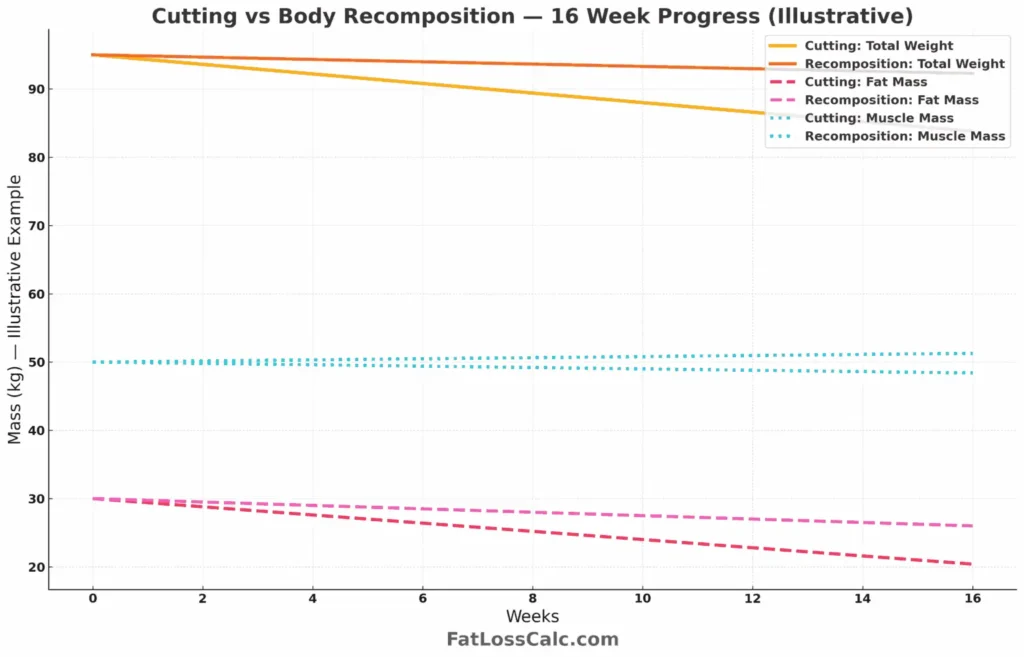
The timeline depends heavily on your starting point, training history, and consistency.
Beginners and people returning after a long break usually notice changes the fastest. Strength improves quickly, muscle comes back faster, and fat loss tends to happen more smoothly.
Intermediate lifters usually need more patience because progress slows down once the beginner stage is over. Advanced lifters often have the hardest time with recomp because gaining muscle while staying lean becomes much more difficult.
This is also where many people quit too early. Recomp changes are usually subtle week to week. Most noticeable transformations happen after months of consistency, not a few perfect workouts. For many people, improvements show up in body fat percentage and measurements before dramatic scale weight changes happen.
Is Cutting a Better Option for You?
For many people, a traditional cutting diet feels simpler than body recomposition because the goal is more straightforward. If you decide to cut, it helps to estimate your calorie needs first so the deficit stays realistic instead of extreme.
Cutting usually makes more sense for people who already have a decent amount of muscle and want faster visible fat loss. A cutting phase is usually more aggressive than recomp because the main goal is maximizing fat loss within a shorter period of time.
For people chasing a noticeably leaner physique in a shorter timeframe, cutting is usually the faster approach. It’s also common before events, vacations, photo shoots, or competitions where someone wants to lean down quickly.
Recomp tends to work better for beginners, people returning to the gym, or anyone who wants a slower and more sustainable approach. A lot of people feel better mentally during recomp because they are not stuck in a harsh calorie deficit for months.
Neither approach is universally “better.” The right choice depends on your starting point, your timeline, and how aggressive you realistically want to be.
How Many Calories Should I Cut for a Body Recomposition?
For recomposition, aggressive cutting is counterproductive.
For most people, a small calorie deficit works better than an aggressive cut during recomp. A moderate calorie deficit is usually easier to sustain and less likely to hurt recovery or gym performance compared to extreme dieting. The goal is giving the body enough energy to train well and recover while still encouraging gradual fat loss.
Trying to diet too hard usually backfires. One reason slower fat loss tends to work better during recomp is because it improves the chances of preserving lean muscle mass while reducing body fat. Preserving lean body mass is one of the biggest reasons many people prefer recomp over aggressive cutting phases.
Energy drops, workouts suffer, recovery gets worse, and muscle retention becomes harder. Slow progress may feel frustrating at times, but it is usually more sustainable long term.
The International Society of Sports Nutrition also notes that moderate calorie deficits and adequate protein intake help preserve lean muscle during fat loss phases.
The problem with aggressive dieting is that recovery, strength, and muscle retention often start suffering quickly. Scientific coaching guidance recommends conservative deficits for better muscle retention and training performance.
How Much Protein Should I Consume for Recomp?
For most people, protein does not need to be complicated. The bigger problem is usually inconsistency. Someone eats high protein for three days, then barely gets enough for the rest of the week.
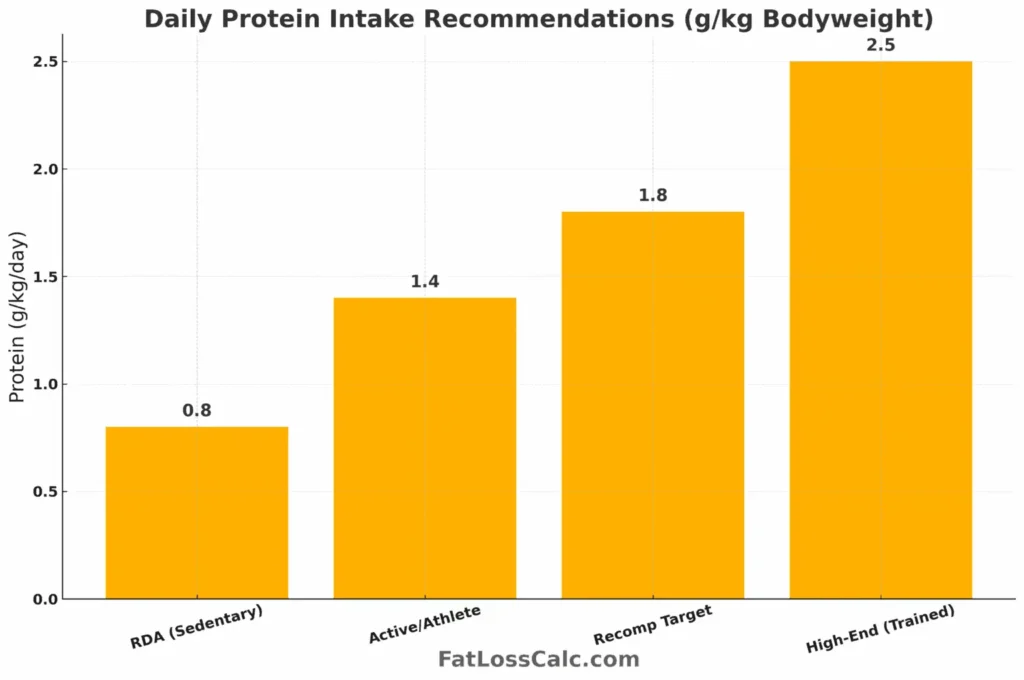
A simple goal that works well for many people is including a solid protein source in every meal instead of obsessing over perfect numbers. Some people also find it helpful to use a macro calculator to estimate protein, carb, and fat intake instead of guessing every meal manually.
What Are the Biggest Mistakes People Make When Trying to Achieve Body Recomposition?
Expecting Fast Results
This is probably the biggest mistake people make with body recomposition. The process is usually slower than aggressive cutting, so many people quit before the real changes start becoming noticeable.
Not Eating Enough Protein
A lot of people train consistently but barely eat enough protein to support recovery and muscle retention. That makes recomp much harder than it needs to be.
Doing Too Much Cardio
Some people turn fat loss into endless cardio sessions while barely lifting weights. That often leads to muscle loss, lower energy, and poor gym performance.
Cutting Calories Too Aggressively
A massive calorie deficit might produce faster scale weight loss, but it can also hurt recovery, training quality, and muscle retention. Slower fat loss is usually easier to sustain.
Ignoring Sleep and Recovery
Poor sleep can quietly ruin progress. Recovery affects workout performance, hunger levels, energy, and muscle repair more than most people realize.
Obsessing Over the Scale
The scale does not always reflect body recomposition accurately. Someone can lose fat, gain muscle, and look noticeably leaner while their body weight barely changes.
Is It Possible?
Yes. Research and real-world coaching experience both show that recomposition can and does happen, especially for beginners, those with higher body fat, and people returning to training. This is why many beginners are able to build muscle while losing fat at the same time during the early stages of training.
However, the likelihood and magnitude of simultaneous muscle gain and fat loss shrink as you become more advanced. A 2024 editorial and several intervention studies summarize this realistically: it depends heavily on the individual, their training history, and their starting point.
Should You Do Cardio During Body Recomposition?
Short answer: yes, but resistance training should come first.
Some people make the mistake of turning fat loss into endless cardio sessions while ignoring strength training completely. That usually backfires because the body can lose muscle along with fat, especially during aggressive dieting.
Moderate cardio usually works best during recomp. Too much can interfere with recovery and strength performance, especially if calories are already low. Recovery is one of the most overlooked parts of body recomposition because muscle growth and adaptation happen outside the gym, not during the workout itself.
Walking is underrated here. Even small increases in daily movement can noticeably increase calories burned over time without adding excessive recovery stress. Short cardio sessions can help too, but strength training should still stay the priority.
Also Read: Carbs Are Not Bad — Why Carbohydrates Can Help You Lose Weight
A Simple Way to Start Body Recomposition
If you are overthinking body recomposition, simplify it.
Start by strength training consistently a few times per week. Focus on basic movements you can gradually improve over time. This concept is often called progressive overload, which simply means slowly increasing strength, reps, or training difficulty over time. Eat enough protein daily, sleep properly, and avoid crash dieting.
You do not need perfect macros or a complicated workout split to start seeing progress. Most people get the best results from doing simple things consistently for several months instead of constantly changing plans every two weeks.
Tracking progress also helps. Photos, waist measurements, gym performance, and how clothes fit usually tell you more than the scale alone.