Most people who say they “don’t like eggplant” aren’t reacting to the vegetable itself. They’re reacting to a bad experience—usually watery cubes, bitter bites, or a pan full of steamed mush that never quite browns. I’ve cooked eggplant every possible wrong way before figuring out what actually matters and what doesn’t.
The mistake I see most often is rushing it. Eggplant holds a surprising amount of water, and if you treat it like zucchini or bell peppers, it will punish you for it. You end up adding more oil, more salt, or more sauce to compensate, and the dish still feels heavy instead of satisfying.
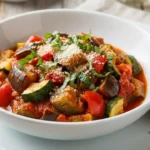
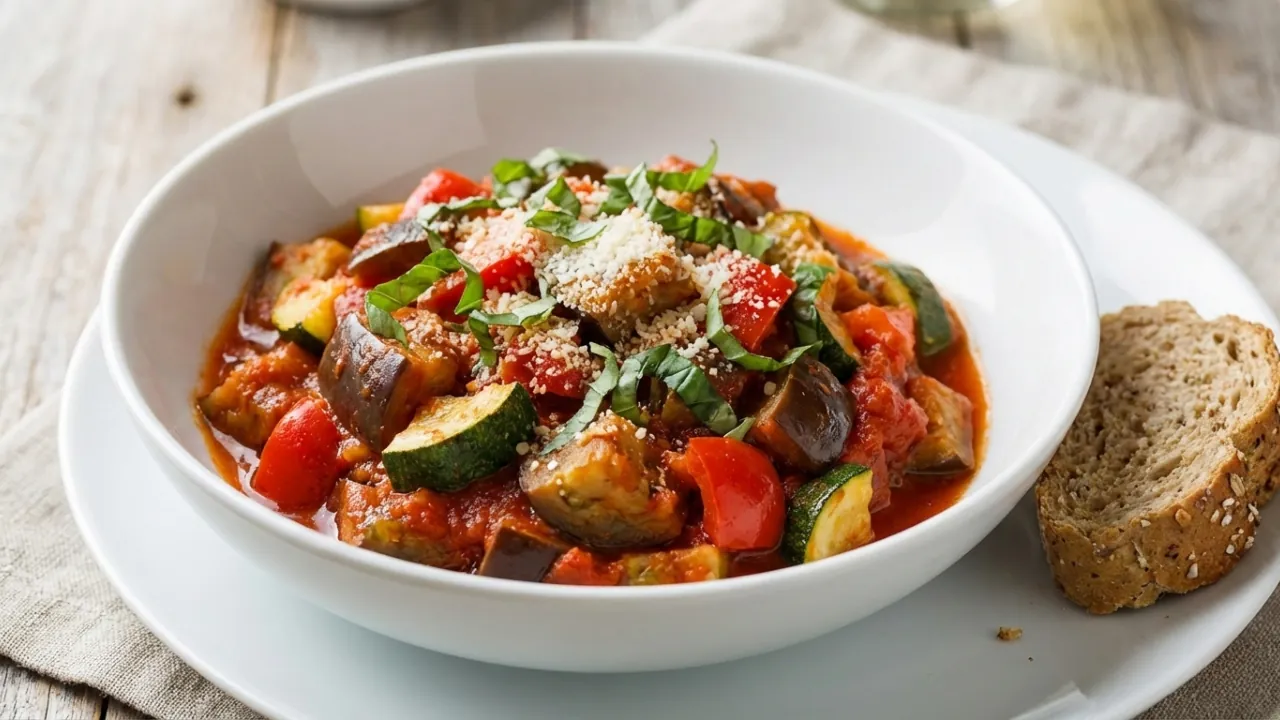
This Eggplant Primavera came together after I stopped trying to “fix” eggplant with extra ingredients and focused on handling it properly. The goal wasn’t to make it fancy or impressive. It was to make a vegetable-based meal that feels complete on its own—something you’d be happy to eat for dinner without feeling like you’re missing pasta or protein.
There are a few extra steps here, and they do take time. But they’re deliberate. When you get them right, eggplant turns tender and creamy, the vegetables stay vibrant, and the dish actually holds up as leftovers. That tradeoff—time for texture—is what makes this recipe work.
💡 Short on time? Scroll down to grab the printable Eggplant Primavera Recipe Card with step-by-step visuals.
Also Read: High Protein Power Eggs Recipe
Why You’ll Love This Eggplant Primavera Recipe
You’ll love this recipe because it breaks the rules in the best way possible. While many recipes use jarred sauce and skip essential prep steps, this version builds flavor from the ground up.
We start with a quick, vibrant homemade tomato sauce, not from a jar, simmered just long enough to marry the flavors without losing their fresh, bright notes—a technique borrowed from Michelin-starred kitchens.
We treat the eggplant with the care it deserves, salting it to draw out excess moisture and ensure it cooks up tender and creamy, never spongy or watery. The result is a primavera where every vegetable shines, the sauce sings with freshness, and the entire dish comes together in a harmonious, satisfying way that will make you wonder why you ever bothered with pasta.
Eggplant Primavera Recipe Overview
|
Difficulty |
Easy |
|
Prep Time |
25 minutes |
|
Cook Time |
25 minutes |
|
Total Time |
50 minutes |
|
Servings |
4 |
|
Calories Per Serving |
285 Kcal |
|
Best Season |
Late Summer to Early Fall (peak eggplant season) |
Description: A chef-crafted, pasta-free primavera starring tender, salted eggplant and summer veggies in a bright homemade tomato sauce. A healthy, high-fiber meal that’s packed with flavor and ready in under an hour.
Ingredients Needed
For the Chef’s Quick Tomato Sauce:
For Finishing:
Kitchen Tools Needed
Step-by-Step Instructions
Total Time: 50 minutes
Step 1: Prep the Eggplant (The Key Step)
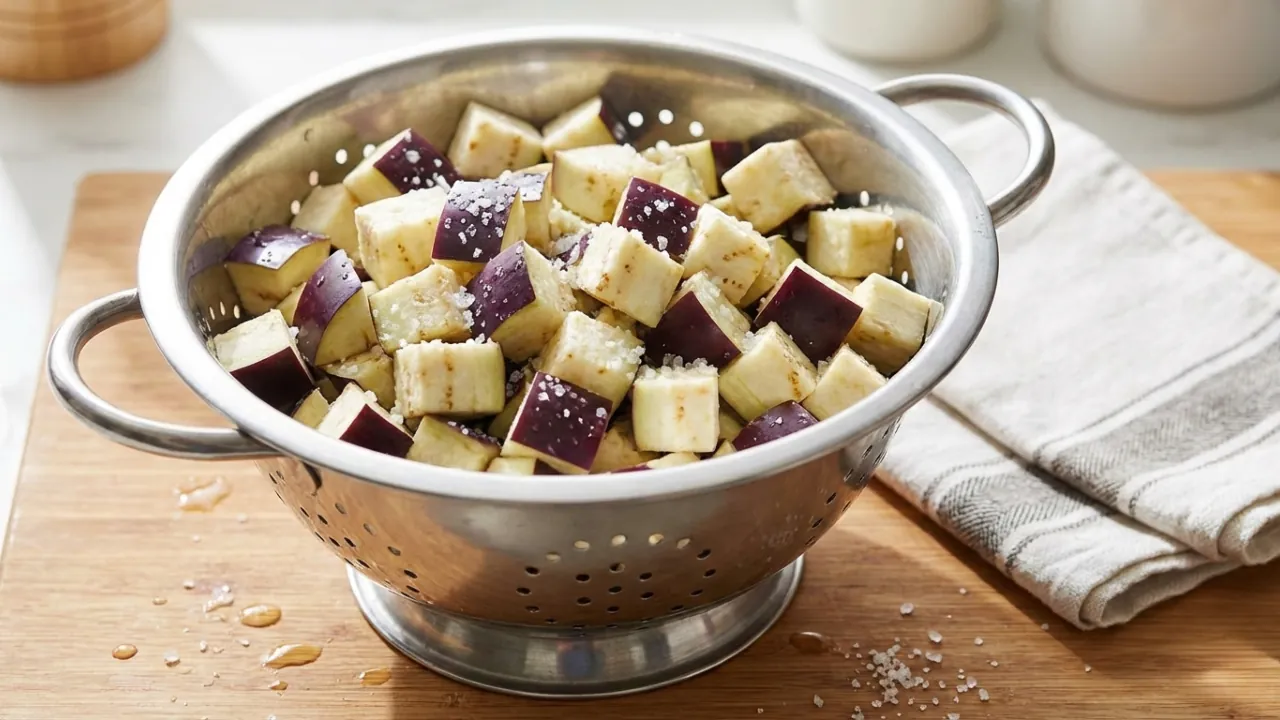
Place the cubed eggplant in a colander and toss with ½ teaspoon of the kosher salt. Let it sit for 20-30 minutes. This crucial step draws out excess moisture and bitterness, guaranteeing a tender, creamy texture in the final dish. After salting, rinse the cubes briefly under cold water and pat them thoroughly dry with a clean kitchen towel.
Step 2: Build Your Quick Sauce
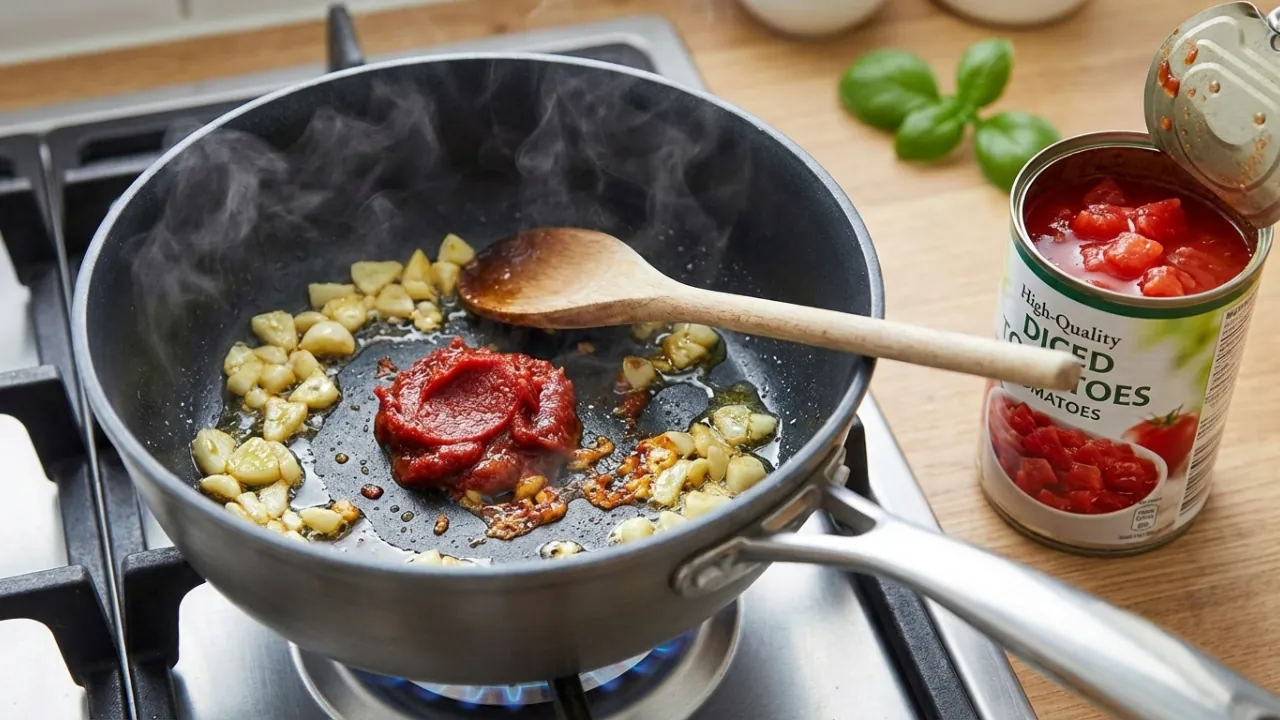
While the eggplant rests, heat 1 tablespoon of olive oil in your saucepan over medium heat. Add the minced garlic and cook for 30 seconds until fragrant. Stir in the tomato paste and cook for another minute to deepen its flavor. Add the diced tomatoes (with their juices), vegetable broth, oregano, and red pepper flakes. Simmer uncovered for 10-15 minutes, allowing it to thicken slightly. Stir in the balsamic vinegar at the end, then set aside.
Step 3: Sauté to Perfection.
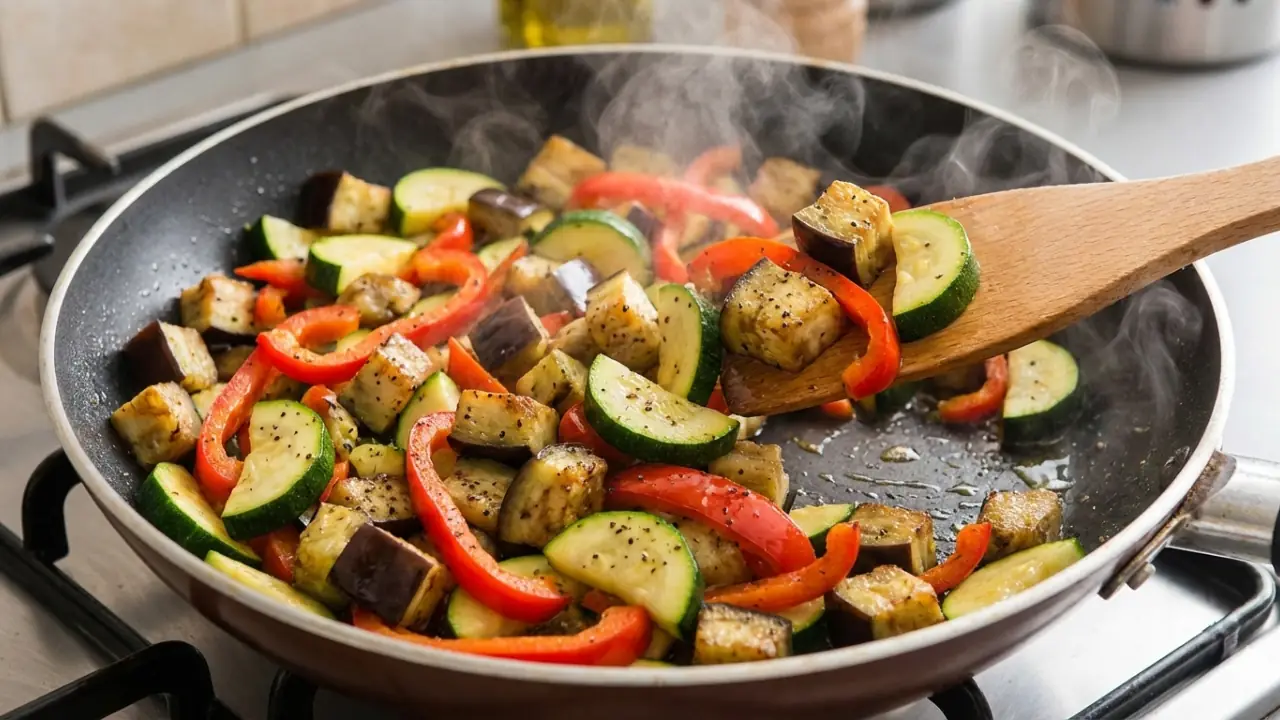
Heat the remaining 1 tablespoon of olive oil in your large skillet over medium-high heat. Add the dried eggplant cubes in a single layer (work in batches if needed) and cook for 5-7 minutes, stirring occasionally, until they are golden brown on the edges. Add the zucchini, bell pepper, onion, and broccoli. Season with the remaining ¼ teaspoon salt and black pepper. Sauté for 6-8 more minutes until all vegetables are tender-crisp and vibrant.
Step 4: Combine and Serve
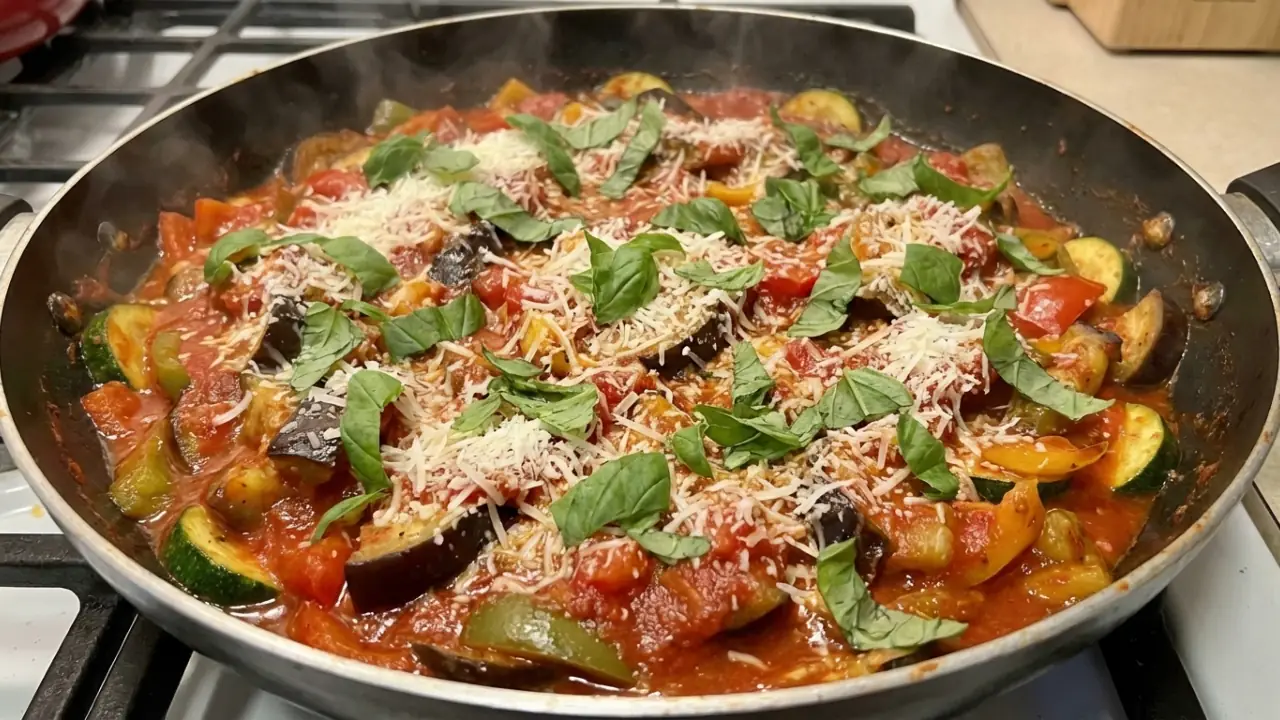
Pour the prepared tomato sauce over the sautéed vegetables in the skillet. Gently fold everything together and heat through for 2-3 minutes. Divide among four bowls or plates. Top each serving with a sprinkle of fresh Parmesan and a generous handful of torn basil leaves.
Special Notes
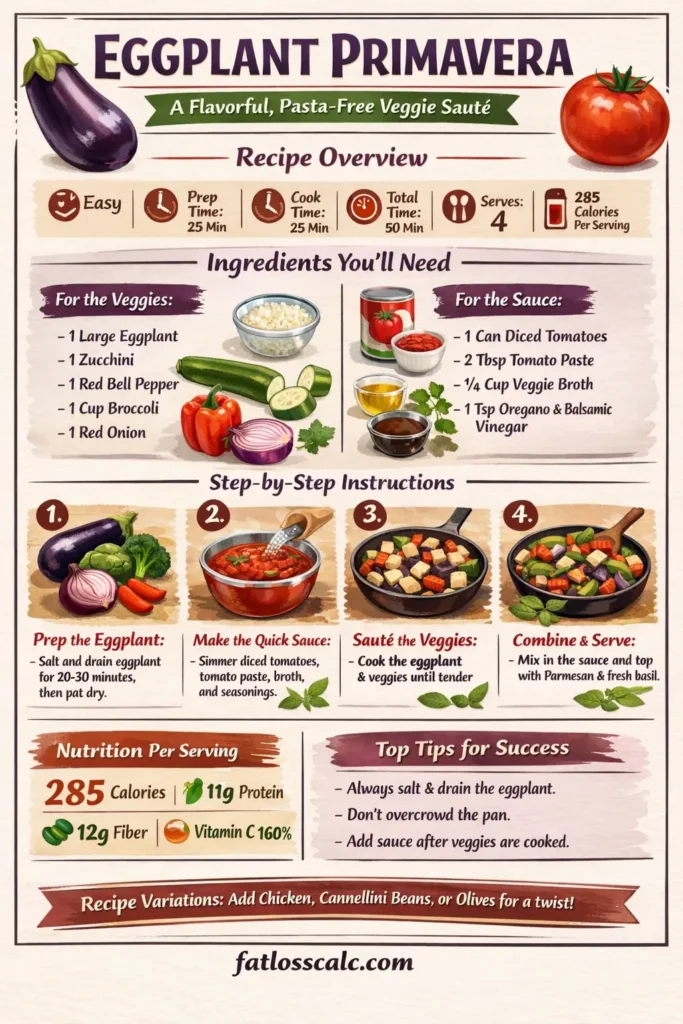
Printable Eggplant Primavera Recipe Card (Save, Print, or Pin)
Want this recipe in one clean, easy-to-follow format?
Use the printable Eggplant Primavera Recipe Card below to save it for later, print it for your kitchen, or pin it to your favorite healthy recipe board.
Nutrition (Per Serving)
| Nutrient | Amount | % Daily Value |
| Calories | 285 kcal | – |
| Total Fat | 12 g | 15% |
| Saturated Fat | 2.5 g | 13% |
| Cholesterol | 5 mg | 2% |
| Sodium | 580 mg | 25% |
| Total Carbohydrate | 38 g | 14% |
| Dietary Fiber | 12 g | 43% |
| Protein | 11 g | 22% |
| Vitamin A | 45% | Vitamin C 160% |
| Calcium | 15% | Iron 20% |
This dish is an excellent source of fiber and vitamin C, and a good source of plant-based protein, especially if you add the optional cannellini beans.
Recipe Variations
- Protein-Powered: For a heartier meal, add 10 oz of cubed, sautéed chicken breast (as in the original inspiration) or a can of rinsed cannellini beans with the sauce.
- Vegan Delight: Omit the Parmesan or use a plant-based alternative. The sautéed vegetables and rich tomato sauce are deeply satisfying on their own.
- Mediterranean Twist: Stir in a handful of pitted Kalamata olives and a tablespoon of capers with the sauce.
- Veggie Swap: This is a perfect “clean out the fridge” recipe. Try yellow squash, mushrooms, asparagus, or a handful of spinach or kale added at the very end.
- Low-Carb/Low-Calorie Note: Using eggplant instead of pasta significantly reduces calorie density while increasing fiber, which can help with fullness for some people. That said, overall impact depends on portion size, added oil, and toppings. This dish works best as part of a balanced day of eating rather than a standalone weight-loss solution.
If you like to understand how meals fit into your overall intake, you can use a calorie or macro calculator as a reference. It’s optional and not required to enjoy or benefit from this recipe.
Also Read: High Protein Spaghetti and Meatballs Recipe
Serving Suggestions
Serve this vibrant primavera in a deep bowl as a standalone meal. For those wanting a more traditional touch, a small side of whole-wheat pasta or a slice of crusty whole-grain bread is perfect for sopping up the delicious sauce. Pair it with a simple arugula salad dressed with lemon juice and a pinch of salt for a complete, restaurant-worthy dinner.
Common Mistakes That Ruin Eggplant Primavera
Frequently Asked Questions
Conclusion
This Eggplant Primavera is proof that healthy eating doesn’t mean sacrificing an ounce of flavor. By applying a few simple chef’s techniques—salting your eggplant, building a quick fresh sauce, and sautéing with purpose—you transform humble ingredients into something extraordinary.
It’s a versatile, nutrient-dense dish that supports your wellness goals without ever feeling like a “diet food.” Give this recipe a try, taste the difference for yourself, and discover how good you can feel when you eat well.
How to Make Eggplant Primavera Without Soggy Vegetables
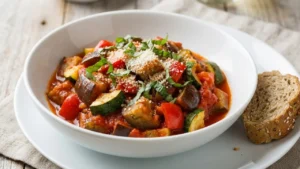
A chef-crafted, pasta-free primavera starring tender, salted eggplant and summer veggies in a bright homemade tomato sauce. A healthy, high-fiber meal that’s packed with flavor and ready in under an hour.
Type: Appetizer
Cuisine: Italian
Keywords: Eggplant Primavera, Eggplant Primavera Recipe
Recipe Yield: 4 servings
Calories: 285
Preparation Time: PT0H25M
Cooking Time: PT0H25M
Total Time: PT0H50M
Recipe Ingredients:
- 1 large eggplant (about 1 lb), cut into ½-inch cubes
- 1 medium zucchini, cut into half-moons
- 1 red bell pepper, sliced
- 1 small red onion, sliced
- 2 cups broccoli florets
- 3 cloves garlic, minced
- 2 tbsp extra virgin olive oil, divided
- ¾ tsp kosher salt, divided
- ½ tsp freshly ground black pepper
- Tomato Sauce
- ¼ cup freshly grated Parmesan cheese
- ¼ cup fresh basil leaves, torn
Recipe Instructions:
Step-by-Step Instructions for Eggplant Primavera Recipe:
- Step 1: Prep the Eggplant (The Key Step). Place the cubed eggplant in a colander and toss with ½ teaspoon of the kosher salt. Let it sit for 20-30 minutes. This crucial step draws out excess moisture and bitterness, guaranteeing a tender, creamy texture in the final dish. After salting, rinse the cubes briefly under cold water and pat them thoroughly dry with a clean kitchen towel.
- Step 2: Build Your Quick Sauce. While the eggplant rests, heat 1 tablespoon of olive oil in your saucepan over medium heat. Add the minced garlic and cook for 30 seconds until fragrant. Stir in the tomato paste and cook for another minute to deepen its flavor. Add the diced tomatoes (with their juices), vegetable broth, oregano, and red pepper flakes. Simmer uncovered for 10-15 minutes, allowing it to thicken slightly. Stir in the balsamic vinegar at the end, then set aside.
- Step 3: Sauté to Perfection. Heat the remaining 1 tablespoon of olive oil in your large skillet over medium-high heat. Add the dried eggplant cubes in a single layer (work in batches if needed) and cook for 5-7 minutes, stirring occasionally, until they are golden brown on the edges. Add the zucchini, bell pepper, onion, and broccoli. Season with the remaining ¼ teaspoon salt and black pepper. Sauté for 6-8 more minutes until all vegetables are tender-crisp and vibrant.
- Step 4: Combine and Serve. Pour the prepared tomato sauce over the sautéed vegetables in the skillet. Gently fold everything together and heat through for 2-3 minutes. Divide among four bowls or plates. Top each serving with a sprinkle of fresh Parmesan and a generous handful of torn basil leaves.
5
View Sources
- USDA FoodData Central – Eggplant nutrition data
- McGee, Harold. On Food and Cooking: The Science and Lore of the Kitchen (eggplant salting and moisture control)
- Harvard T.H. Chan School of Public Health – Fiber and satiety overview