Finding healthy carb, protein, and fat rich foods can make macro tracking easier while helping you stay full, energized, and consistent with your nutrition goals.
Most people struggle with macros for the same reason: they focus too much on numbers and not enough on food quality. I’ve seen people hit their protein goals eating mostly bars and shakes, then wonder why they still feel hungry an hour later. Technically the macros match. Practically, the food choices are working against them.
Counting carbs, protein, and fats gets much easier when you build meals around foods that are naturally filling and easy to track. That’s what this guide is really about.
Not sure of your macro targets? Use our macro calculator to estimate your daily carbs, protein, and fat needs.
Macro tracking works best when you stop labeling foods as “good” or “bad.” The goal is not perfection. One reason many people enjoy macro tracking is that it allows more flexibility than highly restrictive diets. It’s learning how different foods fit into your day without making eating stressful.
This approach is often called flexible dieting, where balance and consistency matter more than strict food rules.
Let’s break down the best carb, protein, and fat-rich foods for macro tracking and overall nutrition.
Also Read: A Handy Guide to High Intensity Interval Training (HIIT)
Quick Answer: Best Foods for Counting Macros
The best macro-friendly foods are simple, filling, and easy to track. Focus on balanced meals built around quality carbs like oats and fruit, protein sources like chicken or Greek yogurt, and healthy fats like avocado, nuts, and olive oil.
Healthy Macro-Friendly Foods
When you’re tracking macros regularly, simpler foods usually make life easier. Foods with consistent nutrition and minimal ingredients are easier to portion, easier to log, and easier to stay consistent with.
Reaching your fat loss goal is still possible by consuming carbs as long as you maintain a sustainable calorie deficit over time.
A lot of people still fear carbs because of old diet trends, but in real life, completely avoiding carbs usually backfires. Energy drops, cravings increase, and workouts start feeling terrible. Most people do better with balanced meals instead of extreme restriction.
I’ve also noticed that people who include moderate carbs consistently tend to stay on track longer than people trying to “eat perfectly” all week and then binge on weekends.
If you keep a few reliable staple foods around, macro tracking becomes much less stressful. These are the foods I see work best for most people because they’re filling, practical, and relatively easy to track consistently.
- Oats / rolled oats
- Quinoa
- Sweet potatoes / yams
- Brown rice / basmati rice
- Lentils / beans
- Chicken breast / turkey breast
- Eggs (whole or whites)
- Greek yogurt (plain, low-fat)
- Cottage cheese / paneer
- Salmon / mackerel / sardines
- Almonds / walnuts / peanuts (measured!)
- Avocado
- Olive oil / flaxseed oil
- Whey protein powder / plant-based protein powder
- Chia seeds / flax seeds
Best Starchy Carbs and Complex Carb Foods
When I coach, I stress: choose complex carbs, not refined or simple sugars (except maybe around workouts). Complex carbs take longer to digest, minimize blood sugar spikes, and carry fiber, vitamins, and minerals.
The best carb source also depends on your routine. Some people feel great eating oats for breakfast but sluggish eating them before training. Others digest rice or potatoes better around workouts because they sit lighter in the stomach. Paying attention to energy levels matters more than blindly copying someone else’s meal plan.
Here are some excellent complex / starchy carb picks:
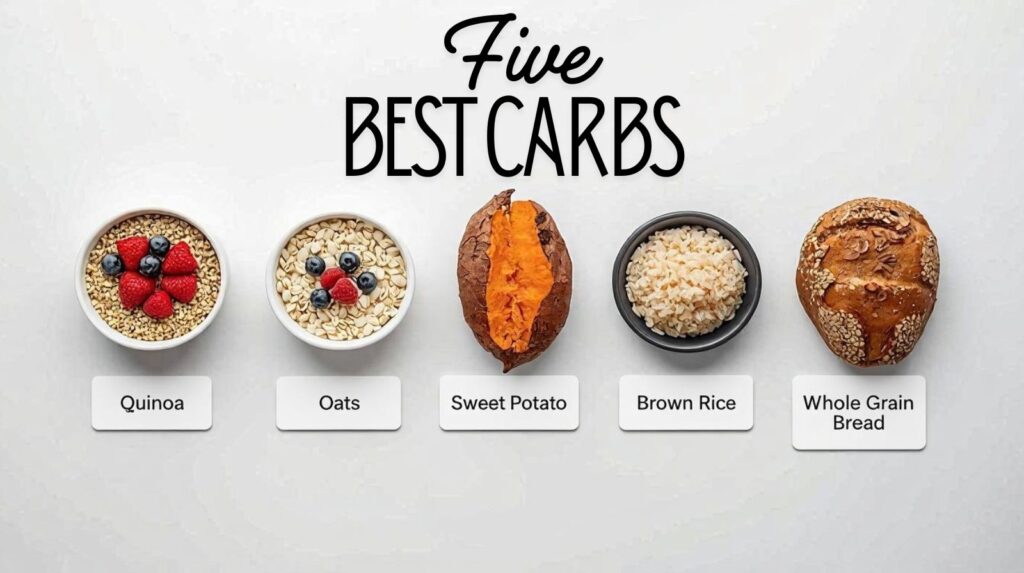
- Sweet potatoes / yams (Rich in beta-carotene, fiber, and slow-release energy).
- Quinoa (It’s technically a seed, but functions like a grain — also has a little protein).
- Oats / steel-cut oats / rolled oats (A breakfast favorite. Slow digesting, fills you up).
- Brown rice / wild rice / basmati (whole grain) (Swap white rice for brown or whole grain varieties). Whole wheat bread and whole wheat pasta can also fit well into balanced macro plans, especially for active individuals needing higher carb intake.
- Legumes (beans, lentils, chickpeas, peas) (These are carbohydrate and protein sources. Fantastic for macro balance).
- Starchy vegetables like corn, butternut squash, pumpkin (These add variety beyond potatoes).
A quick caution: some starchy foods (especially refined ones) can become “fast carbs” (e.g. pasta, white bread). Use them sparingly.
Best Carb-Rich Fruits
Fruits give you natural sugars + fiber + phytonutrients. Here are my top picks to use in macro plans:
- Bananas (great before HIIT workouts or strength training)
- Berries (strawberries, blueberries, raspberries) — lower glycemic impact
- Apples (with skin)
- Pineapple (in moderation)
- Mango (if your macro budget allows)
- Pears / peaches / plums
Fruit gets unfairly criticized in some diet circles because of the sugar content, but most people would actually benefit from eating more fruit instead of less. Whole fruits are far more filling and nutrient-dense than processed snacks that contain added sugars.
Vegetables usually do not get much attention in macro discussions, but they make dieting dramatically easier. They add volume to meals, help with fullness, and improve overall nutrition without adding many calories.
The Best Veggies: High In Nutrients
These are your “free” macros to fill the plate — low in net carbs, but rich in vitamins, minerals, antioxidants, and fiber:
- Leafy greens (spinach, kale, Swiss chard)
- Broccoli, cauliflower
- Bell peppers
- Zucchini, cucumber
- Asparagus, green beans
- Brussels sprouts, cabbage
- Mushrooms, tomatoes
- Peppers, eggplant
These are your sidekick foods — fill your plate with them to increase volume without blowing your carb limits.
Best Protein-Rich Foods for Macro Tracking
Protein tends to be the hardest macro for most people to hit consistently, especially during high-protein fat loss phases. In practice, most people do better when they stop trying to make every meal “perfect” and simply focus on getting a quality protein source into most meals during the day. High-protein meals usually improve fullness, help recovery, and make it easier to maintain muscle while dieting.
Protein also becomes especially important during muscle-building phases because it supports recovery, training performance, and lean muscle growth.
The mistake I see most often is relying only on protein shakes or ultra-lean foods. That works short term, but meals become repetitive fast. Mixing lean proteins with more satisfying options like eggs or salmon usually makes diets easier to stick with long term. You do not need all of these. Most people do well choosing 2–4 reliable protein sources they genuinely enjoy eating consistently.
Animal / Dairy Sources:
| Food Item | Protein (grams) | Notes |
| Boneless/Skinless Chicken Breast | 52 g | Lean, high-quality complete protein. Excellent for muscle growth. |
| Canned Solid White Albacore Tuna | 50 g | Rich in omega-3s and low in fat. Watch mercury levels. |
| Lean Turkey Breast Cold Cuts (Nitrate-Free) | 46 g | Convenient, lower-fat deli option. |
| Pork Loin | 46 g | Lean cut of pork with balanced amino acids. |
| Lean Ground Turkey (99%) | 46 g | Virtually fat-free and high in protein. |
| Egg Whites | 26 g | Pure protein with zero fat or cholesterol. |
| Whey Protein | 50–55 g | Fast-digesting complete protein, ideal post-workout. |
| Tilapia Filets | 45 g | Mild white fish, low fat and easily digestible. |
| Swai Filets | 42 g | Economical lean fish, moderate protein. |
| Shrimp (Peeled) | 46 g | High in protein, low in fat, and rich in selenium. |
| Lean Brisket | 45 g | Hearty, flavorful beef cut with good protein density. |
| Venison Steak | 48 g | Very lean red meat, rich in iron and B vitamins. |
| Beef Jerky | 60 g | Extremely protein-dense due to dehydration. Watch sodium levels. |
| Turkey Jerky | 55 g | Leaner alternative to beef jerky with similar density. |
| Cod | 45 g | Mild, flaky fish that’s low in calories. |
| Lean Ground Grass-Fed Beef (96%) | 47 g | Quality protein with healthy omega-3 fats and CLA. |
| Salmon | 46 g | High-protein and rich in omega-3 fatty acids. |
| Canned Chicken Breast | 49 g | Convenient and shelf-stable protein source. |
| Lean Bison | 48 g | Lower in fat than beef, rich in micronutrients. |
| Collagen Peptides | 45–50 g | Excellent for joint and skin health, incomplete amino profile. |
Plant / Vegan Sources:
| Food Item | Protein (grams) | Notes |
| Seitan | 50 g | High-protein wheat-based meat substitute (not gluten-free). |
| The Plant Era Protein Powder | 50–55 g | Premium vegan protein blend (pea + rice). |
| Vegan Protein Powder (general) | 45–55 g | Varies by blend; usually pea, rice, or hemp based. |
| Tofu (extra firm) | 20 g | Complete plant protein; great for cooking versatility. |
| Tempeh | 41 g | Fermented soybeans with added probiotics and fiber. |
Do You Need Protein Powder?
Protein powder can be useful for convenience, especially for busy people who struggle to hit protein goals through whole foods alone. That said, supplements work best as additions to a balanced diet, not replacements for regular meals.
Coach Advice: mix fast-digesting and slow-digesting protein sources (e.g. whey + casein or Greek yogurt + lean meat) to keep muscle protein synthesis going.
Also Read: How to Quit Soda
The Best Sources of Healthy Fats
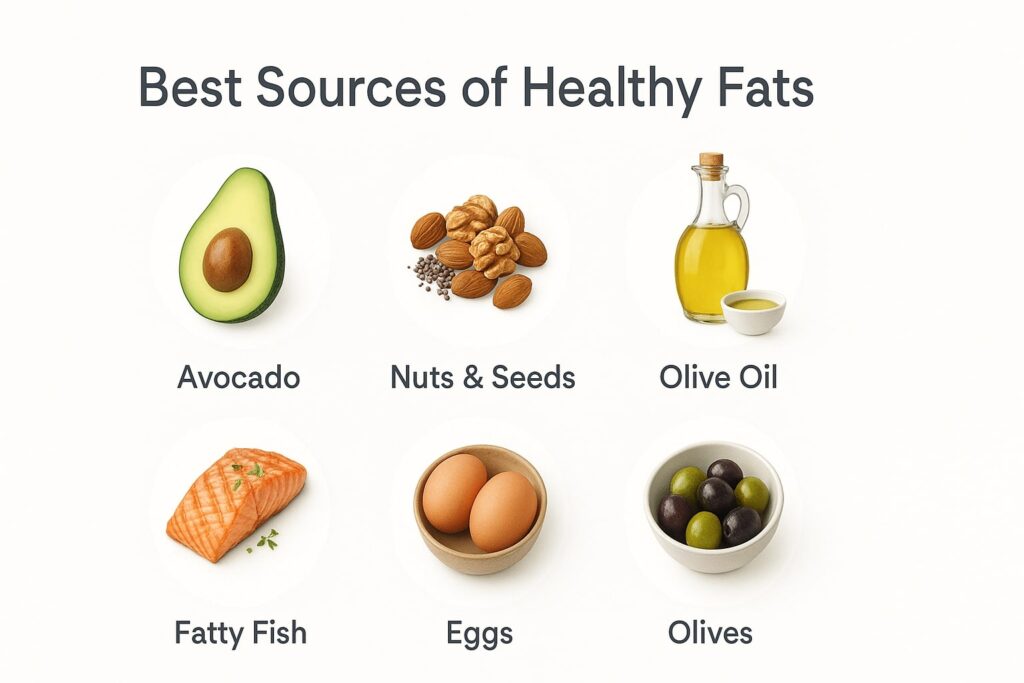
Fats are essential — they aid hormone production, vitamin absorption, and satiety. My favorites:
- Avocado
- Olive oil / extra virgin olive oil
- Nut butters (almond, peanut, cashew — natural, no added sugar)
- Nuts & seeds (almonds, walnuts, chia, flax, pumpkin seeds)
- Fatty fish (salmon, sardines, mackerel)
- Coconut oil / MCT oil (in moderation)
- Flaxseed oil / hempseed oil
Coach’s tip: when you hit your protein & carb targets, fill the rest with healthy fats enough to keep you satisfied, but don’t overdo — fats are calorie-dense. Saturated fats do not need to be completely avoided, but most people benefit from getting the majority of their fats from less processed sources like nuts, seeds, olive oil, and fatty fish.
How Much Fiber Should I Eat?
Fiber helps with more than digestion. It can improve fullness, support blood sugar control, and make meals feel more satisfying overall.
Adults are often recommended to aim for 25–30 grams or more of fiber daily.
The Harvard School of Public Health also explains that higher fiber intake is linked with better digestion, blood sugar control, and heart health.
One mistake people make is increasing fiber too aggressively overnight. Suddenly jumping from very low fiber intake to huge salads and high-fiber foods can cause bloating and stomach discomfort. Increasing intake gradually and drinking enough water usually works much better.
Some guidelines suggest aiming for ~14 grams of fiber per 1,000 calories based on your daily calorie needs.
For women under 50: ~ 25–28 g/day; for men under 50: ~ 31–34 g/day.
Common Mistakes People Make When Counting Macros
One of the biggest mistakes is obsessing over perfect numbers. Nutrition labels are never perfectly accurate, so stressing over every gram usually creates frustration more than results.
Another common issue is building meals around “macro-friendly junk food.” Technically, protein bars and low-calorie snacks can fit your numbers, but they often do not keep you full for very long.
Many people also underestimate liquid calories. Coffee drinks, sauces, oils, smoothies, and even healthy snacks can quietly add hundreds of calories without much fullness.
And finally, beginners tend to overcomplicate everything. You do not need 40 different superfoods. A few reliable carb sources, proteins, fruits, vegetables, and healthy fats usually work better than chasing perfection.
Frequently Asked Questions
Nutritional needs vary based on age, activity level, medical conditions, and goals. If you have a medical condition or dietary restriction, personalized guidance from a registered dietitian or healthcare professional may help.
Final Thoughts
The best foods for counting macros are usually the foods you can eat consistently without feeling miserable or restricted. Perfect macro ratios matter less than building meals that keep you full, support your energy levels, and fit your real lifestyle.
You do not need to fear carbs or obsess over every calorie. Most people make better progress when they focus on balanced meals built around quality protein, smart carb choices, fruits, vegetables, and healthy fats.
Consistency beats perfection almost every time.