
As a nutrition coach, one of the most common questions I get is, “how much fiber to eat when counting macros?” While protein, carbs, and fats get most of the attention in macro counting, fiber is the unsung hero that can make or break your nutritional success. It’s crucial for digestive health, satiety, and achieving your fitness goals.
This article will break down exactly how to calculate your fiber needs, explain the different types of fiber, and answer whether you should subtract it from your carbs.
Also Read: Tracking Macros in Vegetables: A Practical Guide for Weight Loss
What Are Macros and Why Does Fiber Matter?
Before we dive into fiber, let’s quickly recap macronutrients, or “macros.” Your body needs three primary macronutrients in large amounts: protein for building and repairing tissue, carbohydrates for immediate energy, and fats for hormone production and long-term energy storage.
Fiber is a type of carbohydrate, but it behaves differently from its sugary and starchy cousins. Unlike other carbs, your body can’t digest fiber. Instead of being absorbed for energy, it passes through your digestive system, providing unique and powerful benefits:
- Promotes Gut Health: It supports a healthy gut microbiome, which is linked to everything from improved immunity to better mood.
- Aids in Weight Management: High-fiber foods are more filling, helping you feel satisfied with fewer calories.
- Regulates Blood Sugar: It slows the absorption of sugar, preventing energy crashes and cravings.
- Supports Digestion: It adds bulk to stool and helps maintain regularity, preventing constipation.
Given its importance, some experts argue fiber should be considered the fourth macronutrient. Ignoring it while counting your macros is a missed opportunity for optimizing your health.
What Should My Fiber Macros Be?
So, how much fiber do you actually need? While generic recommendations exist, the most effective approach ties your fiber intake directly to your total calorie consumption.
The Simple Fiber Formula
A practical and easy-to-remember formula is to aim for 14 grams of fiber for every 1,000 calories you consume.
Let’s break this down with an example. Imagine a 195 lb male with a daily calorie target of 2,730 calories.
First, divide total calories by 1,000: 2,730 / 1,000 = 2.73
Then, multiply that result by 14 grams: 2.73 x 14 = 38 grams of fiber
His final daily macros would look something like this:
- Protein: 195 g
- Fat: 76 g
- Carbohydrates: 317 g
- Fiber: 38 g
A Quick Caveat: If you are a smaller individual or eating fewer calories, this formula might suggest a very low fiber intake. In such cases, default to a minimum of 25 grams per day to ensure good bowel health.
Coach’s Tip: The first step to nailing your macros is knowing your calories. Use our TDEE Calculator to learn your Total Daily Energy Expenditure and get a personalized calorie target for your goals.
The Two Types of Fiber: Soluble vs. Insoluble
Not all fiber is created equal. There are two main types, each with distinct functions and health benefits. Most high-fiber foods contain a mix of both.
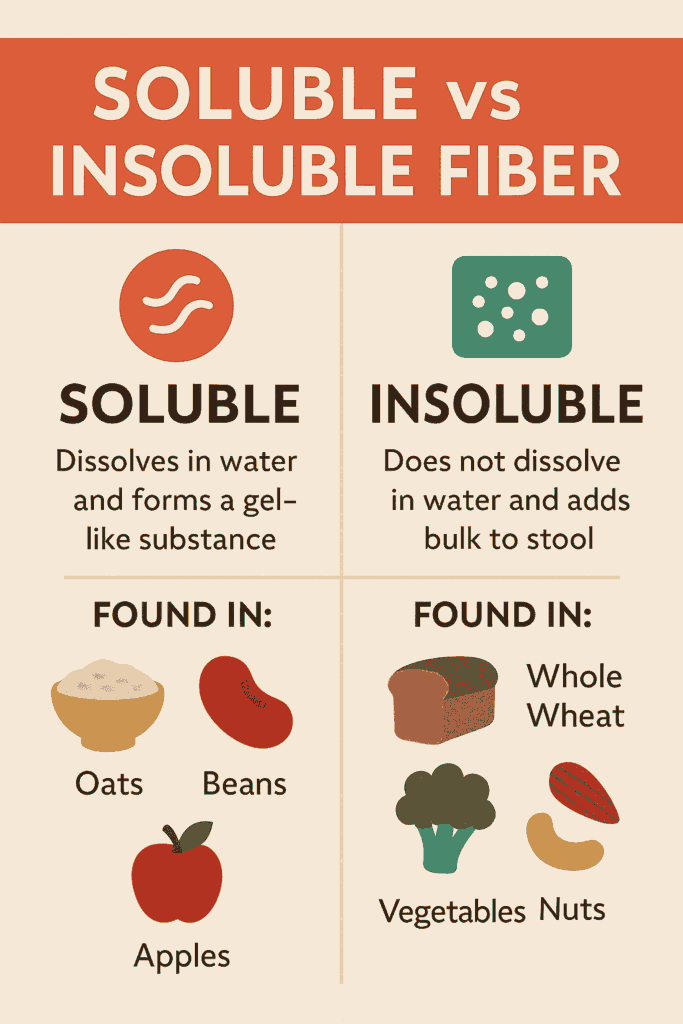
| Fiber Type | What It Does | Best Food Sources |
| Soluble Fiber 🍎 | Dissolves in water to form a gel. Slows digestion, helps lower LDL (“bad”) cholesterol, and regulates blood sugar levels. | Oats, barley, apples, citrus fruits, carrots, peas, beans, lentils, and psyllium husk. |
| Insoluble Fiber 🌾 | Does not dissolve in water. Adds bulk to stool, helps move material through the digestive system, and prevents constipation. | Whole-wheat flour, wheat bran, brown rice, nuts, seeds, and the skins of fruits and vegetables. |
For optimal health, you don’t need to track these separately. Simply focus on eating a wide variety of whole plant foods to naturally reap the benefits of both types.
How Much Fiber Per Protein?
If you’re following a high-protein diet for weight loss or muscle gain, paying attention to fiber is non-negotiable. Protein-rich foods like meat, poultry, and eggs are typically very low in fiber. This imbalance can sometimes lead to an unintended consequence: constipation.
While there’s no official “fiber-to-protein ratio,” emerging research highlights its importance. A 2024 study published in the European Journal of Nutrition found that the dietary protein-to-fiber ratio (P/F ratio) plays a significant role in shaping your gut microbiome. A lower P/F ratio (meaning more fiber relative to protein) was linked to a greater abundance of beneficial, fiber-degrading gut bacteria and higher microbial gene richness.
Practical Advice for High-Protein Dieters
If your diet is high in protein, you should intentionally increase your fiber intake. This may mean aiming for more than the standard 14 grams per 1,000 calories. Prioritize fiber-rich protein sources like beans, lentils, and chickpeas, and ensure every meal includes high-fiber vegetables or whole grains.
Coach’s Tip: Balancing your nutrients is key to sustainable weight loss. Use our High Protein Weight Loss Calculator to create a personalized nutrition plan that ensures you’re getting enough fiber to support your high-protein diet and gut health.
When Counting Macros, Do You Subtract Fiber From Carbs?
This is a hot topic in the nutrition world! The answer depends on whether you are tracking total carbohydrates or net carbohydrates.
Total Carbohydrates: The entire amount of carbs in a food, including starches, sugars, and fiber.
Net Carbohydrates: The carbs that are actually digested and absorbed by your body. Calculated as Total Carbohydrates – Fiber.
For example, a medium avocado has about 17 grams of total carbs. Since 13 of those grams are fiber, its net carb count is only 4 grams.
So, Which One Should You Track?
For beginners, I strongly recommend tracking total carbohydrates and not subtracting fiber. Here’s why:
- It’s Simpler: Nutrition labels list total carbs, making it straightforward without any extra math.
- It’s FDA-Recommended: The U.S. Food and Drug Administration (FDA) does not officially recognize “net carbs” and recommends using total carbohydrates on the nutrition label.
- It Encourages Better Choices: Focusing on total carbs naturally guides you toward whole, fibrous foods rather than processed “low-net-carb” products.
The Bottom Line: If you start counting macros, don’t bother subtracting the fiber. If you are an advanced athlete or someone following a therapeutic ketogenic diet under medical guidance, then you might want to try tracking net carbs. For everyone else, total carbs are the way to go.
Your Action Plan for Hitting Your Fiber Goals
Knowing your target is one thing; hitting it is another. Here are my top tips for effortlessly increasing your fiber intake:
- Start Strong: Choose a breakfast cereal with at least 5 grams of fiber per serving, or add unprocessed wheat bran or berries to your meal.
- Go Whole Grain: Make at least half of your grains whole grains. Swap white bread for whole-wheat, white rice for brown rice, and regular pasta for whole-wheat pasta.
- Embrace Legumes: Add kidney beans to salads, make black bean nachos, or enjoy a lentil soup.
- Snack Smart: Keep whole fruits, raw vegetables, nuts, and seeds on hand for healthy, high-fiber snacks.
Crucial Reminder: When you increase your fiber intake, do it gradually over a few weeks and drink plenty of water. This helps your digestive system adjust and prevents gas, bloating, and cramping.
Also Read: Intuitive Eating
How Much Fiber to Eat When Counting Macros?
Fiber is a powerful player in the macro counting game. Remember these key takeaways:
- Calculate your needs with 14g of fiber per 1,000 calories, with a minimum of 25g.
- Eat a variety of plants to get both soluble and insoluble fiber.
- If you’re on a high-protein diet, be extra vigilant about your fiber intake to support gut health and avoid constipation.
- For simplicity and effectiveness, track total carbohydrates instead of net carbs, especially if you’re just starting out.
By giving fiber the attention it deserves, you’ll not only hit your macro numbers but also build a foundation for long-term health, energy, and well-being.