Tracking macros gets weird fast when you try to be “accurate” before you’re actually consistent. I see the same beginner mistake over and over: someone downloads an app, buys a food scale, and suddenly every meal feels like homework. They start weighing spinach, obsessing over sauces, and second-guessing every restaurant meal — then quit a week later because it feels harder than it should.
That’s usually not a macro problem. It’s a process problem.
And if tracking tends to make you obsessive or anxious around food, a simpler portion-based approach may be a better fit than strict macro counting.
If your goal is better body composition, more predictable calorie intake, or tighter control over calories, macro tracking can help — but only if you make it simple enough to repeat. In practice, the people who stick with it usually do three things well: they track the foods that matter most, they stop chasing perfect precision, and they use the same method over and over.
This guide is built for that version of macro tracking. I’ll show you how to log packaged foods, weigh common staples, handle restaurants without spiraling, and use an app in a way that actually reduces stress instead of creating more of it. If you’re new, the goal is not perfection this week. The goal is to make tracking feel normal enough that you can still do it next month.
Also Read: Macro Friendly Snacks That Won’t Break Your Calories
What Are Macros?
“Macros” are short for macronutrients: protein, carbohydrates, and fat. These are the three nutrients that provide most of the calories in your diet, and they’re the main numbers people track when they want more control over body weight, body composition, or performance.
In practical terms:
- Protein is usually the most important macro to hit consistently because it supports muscle retention, recovery, and fullness.
- Carbs are often the easiest macro to overshoot when meals are unplanned, but they’re also the body’s easiest fuel source for training and daily activity.
- Fat matters for hormones, food satisfaction, and meal quality, but it adds up quickly because it’s calorie-dense.
If you’re new to this style of eating, the most helpful mindset is usually flexibility, not perfection. That’s why many people do well with a flexible dieting approach instead of rigid meal rules.
If you need a starting point for your calorie and macro targets, use this guide on how to calculate your numbers. And once you’ve figured out your TDEE and macros, the rest becomes much less about math and much more about repeatable habits.
Why Macros Matter — And the Quick Math
A short bit of useful science so you can make smart swaps: carbs and protein each provide about 4 calories per gram, and fat provides about 9 calories per gram. Those values are the standard convention used in nutrition labels and food databases, which is why they’re so useful for quick meal math. That simple rule is how nutrition labels and calorie math usually work. If you know grams of each macro, you can calculate how many calories a food supplies.
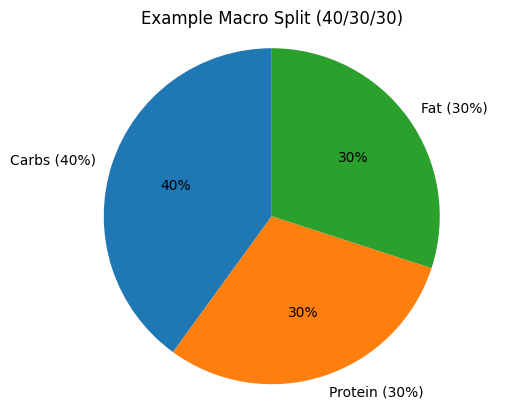
If you’re new to macro tracking, seeing your daily targets as a simple ratio like this can make meal planning feel much less overwhelming.
That math is your friend. It turns meals into simple inputs (grams of P/C/F) instead of guesswork or restrictive rules.
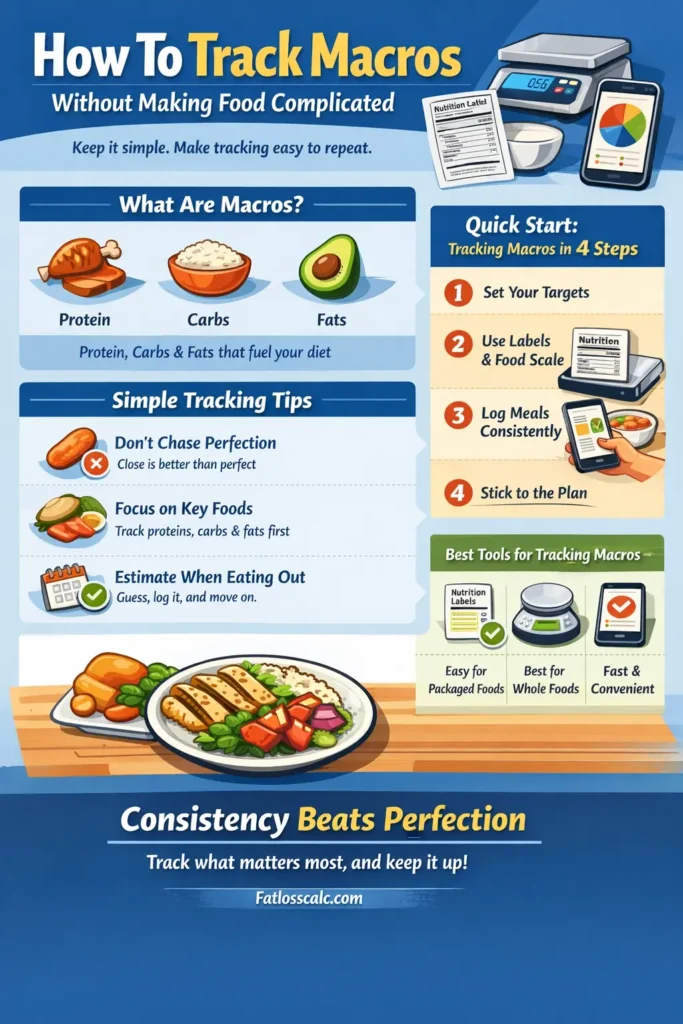
Quick Start: How To Track Macros in 4 Steps
If you want the simplest version, do this:
- Set your calorie and macro targets first so you know what you’re aiming for.
- Use labels for packaged foods and a food scale for proteins, starches, and calorie-dense foods.
- Log meals in the same app or notebook every day so repeat foods become faster to track.
- Stick with the same method for 10–14 days before changing your calories or macros.
If you only remember one thing, remember this: consistency beats perfect accuracy.
Tracking Macros for Beginners
If you’re new, stop trying to be perfect and aim for consistent. There are three realistic ways to assign macro values to food:
- Use the nutrition label that comes on packaged foods.
- Weigh whole foods with a digital food scale and look them up in a reliable database.
- Use a macro-tracking app (it stores your frequent foods so you don’t re-enter them).
Pick one, get good at it, then layer on the others. In week one, focus on proteins, starches, and calorie-dense extras first — not perfectly logging every vegetable, herb, or low-calorie add-on. Start with just one meal a day if that feels easier — progress beats paralysis.
Best Ways to Track Macros (And When to Use Each)
If you’re not sure which tracking method to use, this quick comparison makes the tradeoffs easier to see.
| Method | Best For | Most Accurate For | Biggest Limitation |
| Nutrition labels | Packaged foods | Pre-portioned foods | Serving sizes are easy to misread |
| Food scale + database | Whole foods and home cooking | Proteins, rice, oats, fats | Takes more effort at first |
| Macro-tracking app | Daily consistency and repeat meals | Fast logging and total daily tracking | Database entries can vary in quality |
What Matters Most in Week One
If you’re brand new, don’t try to track everything equally.
Prioritize these first:
- Protein portions
- Starches like rice, oats, bread, pasta, and potatoes
- Calorie-dense fats like oils, nut butters, cheese, dressings, and avocado
- Restaurant meals and takeout
What can wait:
- Leafy greens
- Herbs and spices
- Low-calorie vegetables
- Tiny condiments that don’t materially change the meal
That doesn’t mean those foods never matter. It means they usually matter less than the foods people undercount most.
How To Track Macros Using Nutritional Labels
To track macros with a nutrition label, start with the serving size, then log the grams of fat, total carbs, and protein based on the amount you actually eat. Nutrition labels are the easiest entry point because the work is already done for you. If you eat two servings, multiply the listed macros by two before you log it.
For prepared meals and packaged entrees, the label usually reflects the full product, so your main job is just matching the serving size to what you actually ate.
One exception: fresh produce, bulk items, and many unpackaged foods may not have a full label, which is when a food scale and a reliable database become more useful.
For most beginners, tracking total carbs is simpler and more useful than trying to micromanage net carbs right away. If fiber matters for your goals, you can track it separately — but you do not need to make that your first layer of complexity. The FDA’s guide on how to understand and use a Nutrition Facts label is worth bookmarking if you want a reliable reference for what each line on the panel actually means.
What Are Net Carbs?
Net carbs usually means total carbohydrates minus fiber, and sometimes certain sugar alcohols. Lower-carb diets often use net carbs because fiber doesn’t affect digestion or blood sugar the same way as other carbs.
For most people who are simply learning to track macros, total carbs are easier and more consistent. Net carbs become more relevant if you’re following a strict low-carb plan, managing blood sugar more closely, or using a ketogenic approach.
A helpful rule: if you’re a beginner, don’t let net carbs distract you from the bigger habit of logging food consistently. And if you want the quick explanation behind why people subtract fiber, the short version is that Fiber is not digested in the same way as other carbs.
How To Weigh Food and Use a Food Scale to Track Macros
A good food scale changes everything. Here’s how to make it painless:
The most common tracking mistake here is not the scale — it’s using the wrong database entry for the way the food was measured. People weigh cooked chicken and log raw chicken, or weigh dry rice and log cooked rice.
That mismatch can throw your numbers off more than a small portioning error. The fix is simple: always match the state of the food (raw, cooked, dry, prepared) to the database entry you choose. If you want the most reliable food composition data, USDA FoodData Central is one of the best free references available.
- Turn the scale on and set it to grams (or ounces if you prefer). Tip: databases usually give macro info in grams, so grams are convenient.
- Place your empty bowl or plate on the scale and press “tare” (zero).
- Add the food and read the weight.
- Find the matching entry in your app or use a reliable database like USDA FoodData Central to get macros for that exact raw/cooked state.
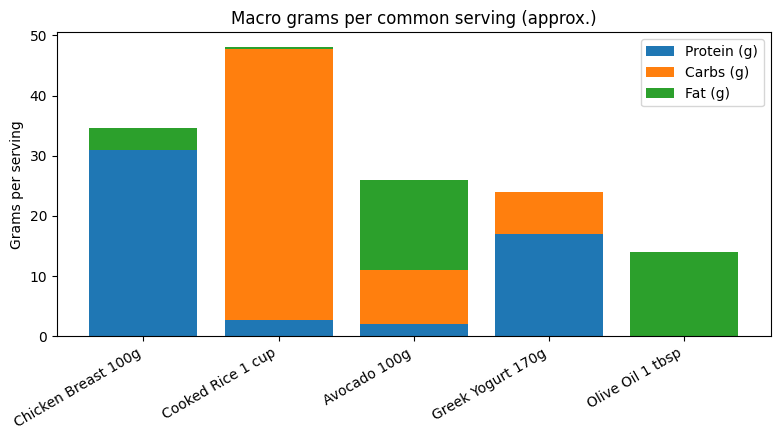
This is why two foods that look similar in portion size can affect your daily macros very differently.
Example: You weigh 150 g of raw chicken breast. Look up “chicken breast, raw” in the database and change the serving to 150 g — the app will show protein, fat, and carbs for that portion. Enter or save it. Done.
Do You Weigh Food Raw or Cooked for Macros?
When possible, weigh food raw — but the real rule is to match the database entry to the way the food was measured. If you weigh cooked food, use a cooked entry. If you weigh raw food, use a raw entry. If you use a database, use the same state the database uses (raw vs cooked). If your recipe or database lists cooked weights, then weigh cooked — consistency is what matters. FoodData Central and other databases distinguish raw vs cooked, so match your measurement approach to the database entry.
Do I Weigh Rice or Oats Cooked or Uncooked?
Most databases and recipes list dry or raw measurements for grains (for example, “1/2 cup rice, dry”). If your recipe or database uses dry volumes or weights, weigh dry. If you’re measuring a plate of already-cooked rice or oats, find a cooked entry. The key is to match the state (dry vs cooked) between your scale and the database.
Should I Weigh My Food in Grams or Ounces?
Pick grams if you want precision and easier matching with databases. Ounces are fine too, but grams are globally standard in nutrition databases and are simple to multiply. If you live in the U.S. and your scale displays ounces by default, switch it to grams for easier math.
How To Track Macros When Eating Out
Eating out doesn’t have to derail you. The process looks like this: plan, prioritize, estimate, log.
Plan ahead by checking a restaurant’s nutrition page when it exists. Many national chains publish macro information, and using that data is always better than guessing. If a smaller restaurant doesn’t provide nutrition info, make a reasonable estimate in your app by finding a similar dish from a major chain or a comparable logged meal.
When you’re unsure, it’s usually smarter to choose the slightly higher-calorie estimate instead of the lowest one — especially for restaurant meals where oils, sauces, and portion sizes are easy to underestimate. But there’s a tradeoff: if you eat out often and always overestimate aggressively, you can create unnecessary restriction earlier in the day. The goal is not to punish yourself with a huge buffer. The goal is to avoid the overly optimistic guess.
A practical rule: if you know you’re eating out later, save a little more room in the macro that tends to get blown up by restaurant meals. For many people, that’s fat, because cooking oils, dressings, cheese, and sauces add calories quickly.
Go Easy on the Drinks
Drinks — especially alcohol and sugary beverages — quietly add calories fast. Alcohol provides about 7 calories per gram, and some tracking apps don’t represent alcohol perfectly in macro totals, so the calorie count matters more than the macro label. A few beers or cocktails can easily add 300–600 calories without making you feel especially full.
If you plan to drink, budget for it in advance and keep the rest of the meal simpler. Water, sparkling water, and lower-calorie mixers can make the math easier when calories are tight. And in real life, the bigger issue with alcohol is often not just the calories — it’s that alcohol can lower food restraint and make portion control harder later in the meal.
That same “estimate, don’t obsess” approach works best for restaurant meals too — here’s what that looks like in practice.
How To Track Macros at Restaurants
You order a chicken burrito bowl at a local place with no nutrition info. Here’s a simple workflow:
- Identify the main components (rice, beans, chicken, cheese, salsa, guac, oil).
- Search your app for “chicken burrito bowl” or “burrito bowl restaurant” and look at three similar entries.
- Choose the slightly higher-calorie estimate instead of the most optimistic one.
- Log that in your app and note the guess (so you can fine-tune next time).
If you prefer more control, ask the server about portion sizes and cooking fats, and favor grilled/smaller portions where possible.
How To Track Macros with an App
To track macros with an app, search or scan the food, confirm the serving size, and log it the same way every time so repeat meals become faster and more accurate.
A good app removes most of the friction from tracking. Most macro apps let you:
- Scan barcodes for packaged foods
- Search large databases for common grocery and restaurant items
- Save custom foods and recipes so you only enter them once
That last feature matters more than most people realize. Once you’ve logged your usual breakfast, your go-to protein source, or your favorite takeout order, future tracking becomes much faster. What feels tedious on day one often becomes a two-tap habit by the end of the week.
That said, an app is helpful — not mandatory. A notebook, Notes app, simple spreadsheet, or even a basic food journal can still work if you’re learning the basics. Especially in the first week, the goal is building awareness, not perfect totals. The app just reduces the repetitive math.
One important caveat: app databases are not always clean, so when multiple entries exist for the same food, choose verified listings or cross-check with the package label when possible.
If you want a practical overview of how to keep track of your macros in a way that supports fat loss, that guide is a useful next read once you’ve built the daily logging habit.
A Realistic, Coach-Friendly Tracking Plan
If you want structure that’s not rigid:
- Start with a calorie target and a simple macro split that fits your goal, food preferences, and training style. A split like 30% protein, 40% carbs, 30% fat can work as a basic example, but it is not a universal prescription. Protein needs and ideal macro ratios vary based on body size, activity level, appetite, and whether your priority is fat loss, maintenance, or performance.
- Track only one meal fully for the first week (pick dinner). After a week, add breakfast.
- Use a scale for proteins and starches early on; eyeball low-impact items like leafy greens.
- Save frequent meals and restaurant options in your app so they’re one-tap entries.
- Reassess after two weeks — small adjustments are normal.
Common Macro Tracking Mistakes
Most macro tracking problems come from inconsistency, not from bad math. These are the mistakes that create the most frustration:
If you fix just these five issues, your tracking usually becomes much more accurate without adding much extra effort.
1) Switching between raw and cooked entries
This is the classic one. If you weigh raw chicken, log a raw chicken entry. If you weigh cooked rice, use a cooked rice entry. Mixing them creates bigger errors than most people realize.
2) Tracking “healthy foods” loosely but logging packaged foods carefully
People tend to be precise with protein bars and cereal, then casually guess on peanut butter, olive oil, avocado, or granola. That’s backwards. Calorie-dense foods usually deserve more attention than low-calorie vegetables.
3) Ignoring sauces, oils, dressings, and bites while cooking
A tablespoon of oil, a spoonful of peanut butter, or a few “small” tastes while cooking can add up quickly. These are some of the easiest calories to miss.
4) Trying to track everything perfectly in week one
Perfection is one of the fastest ways to make tracking feel exhausting. In the beginning, focus on proteins, starches, calorie-dense extras, and restaurant meals. Low-impact foods like leafy greens do not need the same mental energy.
5) Adjusting calories too quickly
One high day or one low day doesn’t mean your targets are wrong. Give your plan at least 10–14 days of reasonably consistent data before making changes unless something is clearly off.
Also Read:
Frequently Asked Questions
Conclusion
If you’re starting today, keep it simple:
- Use the guide on how to calculate a starting calorie target and macro split.
- Log one full meal tonight instead of trying to overhaul your whole day.
- Weigh your main protein source the next time you cook.
- Save that meal in your app so tomorrow is easier.
- Follow the same process for 10–14 days before deciding whether anything needs to change.
If you can be consistently “close enough” for two weeks, you’ll usually learn more than someone who tries to be perfect for two days.
Macro tracking works best when it feels boring in the best possible way. You do not need perfect numbers, and you do not need to turn every meal into a math project. You need a repeatable system that catches the foods that matter most, ignores the noise, and gives you enough consistency to make useful adjustments over time.