A lot of people start a diet feeling motivated, then run into the same problem a few weeks later. They skip pizza night with friends, avoid desserts completely, and try to follow a “perfect” meal plan. Then real life shows up. A birthday dinner happens. Work gets busy. Cravings hit. Suddenly one unplanned meal feels like failure.
That cycle is more common than people think.
Flexible Dieting takes a different approach. Unlike many traditional diets that rely on strict food rules, Flexible Dieting focuses more on long-term eating habits and overall consistency. That is one reason many people view it as a more sustainable diet approach instead of a short-term challenge.
Instead of building your eating habits around strict rules, it focuses on structure with room to breathe. You pay attention to your calories and macronutrients while still eating foods you actually enjoy. If you are unsure where to start, using a Macro Calculator can help you estimate your daily protein, carbohydrate, and fat targets.
The reason many people stick with it is simple. It feels more like learning a skill and less like following a punishment plan. You are not trying to be perfect every day. You are trying to be consistent over time.
Also Read: Top 15 Healthy Carb, Protein, and Fat Rich Foods
Quick Answer: What Is Flexible Dieting?
Flexible Dieting is a nutrition approach that focuses on calories and macronutrients rather than strict food rules. Instead of eliminating specific foods, people track protein, carbohydrates, fats, and overall calorie intake while allowing flexibility in food choices. Many people use Flexible Dieting because it can feel more sustainable and easier to maintain long term compared to highly restrictive diets.
A Macro-Based Flexible Dieting Plan
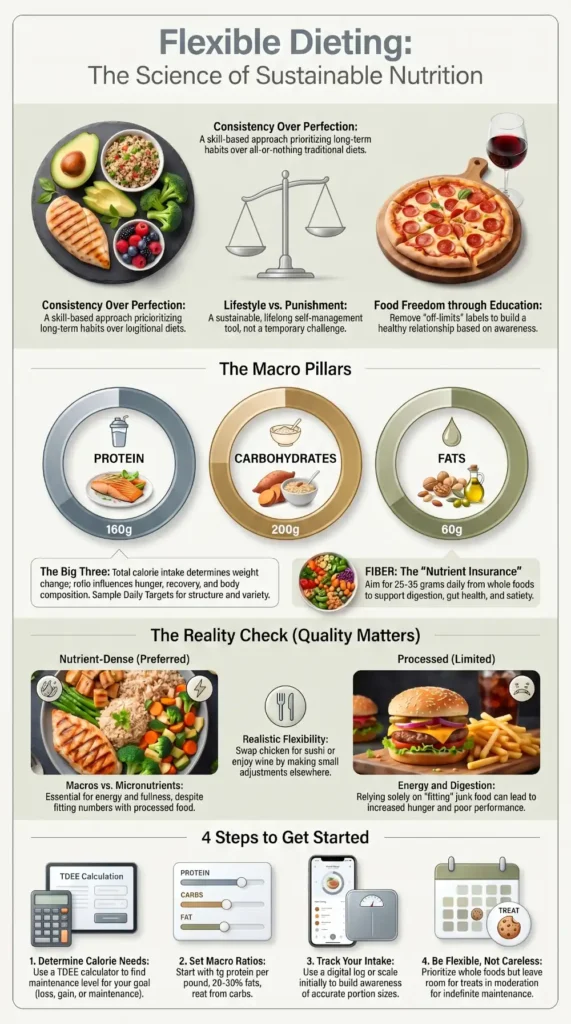
At its core, flexible Dieting focuses on your macronutrients: protein, carbohydrates, and fats.
Instead of following a rigid meal plan, you eat foods that help you meet your daily macro targets. For instance:
- Protein: 160g
- Carbs: 200g
- Fats: 60g
This method, often called an IIFYM diet plan, gives you structure and flexibility while still allowing room for foods you enjoy.
A Quick Reality Check
This is where many people misunderstand Flexible Dieting. It does not mean eating fast food all day and calling it balanced because the numbers fit. Technically you can hit your macros that way, but reality usually catches up quickly.
If most of your food comes from highly processed options, you might feel hungry sooner, have less energy, or struggle to stay consistent. Flexible Dieting works best when most meals come from nutritious foods and you leave room for foods you simply enjoy.
If you need ideas for balanced macro-friendly foods, these healthy carb, protein, and fat rich foods are good starting points.
Getting started with a Macro-Based Flexible Dieting plan does not have to be complicated. The first step is figuring out roughly how many calories your body needs each day. A TDEE Calculator can help estimate your maintenance calories before setting your macro targets. From there, you can set protein, carbohydrate, and fat targets that match your goal, whether that goal is fat loss, muscle gain, or maintenance.
You can use our Macro Calculator to estimate your starting numbers, then adjust based on your progress over time.
There are three main macros: protein, fat, and carbohydrate.
Each macronutrient contains calories, which means your total intake still plays a major role in weight loss, weight gain, or maintenance. Macros influence things like hunger, recovery, workout performance, and energy levels, while overall calorie intake usually determines whether your weight changes over time.
This combination of macro-nutrients affects body composition, encourages workouts, and controls hunger.
Here’s a simple visual breakdown of how Flexible Dieting works in practice.
Food Quality Still Matters
One reason Flexible Dieting sometimes gets criticized is because people assume food quality no longer matters if the macros fit. In reality, most experienced macro trackers quickly realize that food choices still affect energy, digestion, hunger, workout performance, and overall health.
Someone could technically hit their numbers eating mostly processed foods, but staying full and consistent usually becomes harder. That is why many people aim for balance. They build most meals around protein, vegetables, fruit, whole grains, and minimally processed foods while still leaving room for flexibility socially or occasionally.
What Does It Mean to Be Flexible?
Flexibility is the heart of this approach — and also the reason it works so well for long-term adherence.
Being “flexible” means you’re not tied down to a strict food list or meal timing rule. You can eat out with friends, enjoy birthday cake, or travel without derailing your progress.
Here’s how flexibility looks in real life:
- You can swap chicken and rice for sushi if it fits your macros.
- You can have a glass of wine and make small adjustments to your dinner.
- You can enjoy pancakes on Sunday and balance them with lean protein later in the day.
This freedom reduces the “all-or-nothing” mindset that often causes people to quit diets.
One mistake people make early on is turning Flexible Dieting into a numbers game and forgetting everything else. Someone might eat protein bars, cereal, and snacks all day because the macros fit perfectly on paper. The numbers may look fine, but hunger, digestion, and energy often tell a different story.
Macros matter, but food choices still matter too.
For example, someone could technically fit fast food into their macros every day, but they may still feel hungry more often compared to meals built around protein, vegetables, potatoes, rice, fruit, or other filling foods.
Instead of thinking “I messed up,” you start thinking “I’ll adjust and stay on track.” That’s the difference between a temporary diet and a sustainable lifestyle.
Fiber: Track or Not?
Great question — and one that comes up often with Flexible Dieting.
The short answer: yes, keep an eye on your fiber intake.
Fiber plays a huge role in digestion, satiety, and gut health. If you are unsure how much fiber you actually need while tracking macros, this guide on how much fiber to eat when counting macros explains it in more detail.
The Harvard T.H. Chan School of Public Health also highlights fiber’s role in digestion and long-term health, especially when it comes from foods like fruits, vegetables, legumes, and whole grains. However, since it’s technically a carbohydrate, it can be confusing to know whether to count it toward your total carbs.
Here’s a simple approach I recommend as a coach:
- Track your total carbs as listed on nutrition labels (they already account for fiber).
- Aim for 25–35 grams of fiber daily, primarily from whole foods like fruits, vegetables, oats, beans, and whole grains. If vegetables confuse you while tracking macros, this guide to tracking macros in vegetables can make the process much easier.
Think of fiber as your “nutrient insurance.” It helps regulate blood sugar, supports healthy digestion, and keeps you fuller longer — which naturally helps with portion control and consistency.
Give Yourself Time to Adjust
The first week of tracking food can feel awkward. Almost everyone feels slightly overwhelmed at first. Looking up foods, checking labels, and logging meals takes extra effort in the beginning. After a few weeks, most people settle into routines and the process becomes much faster and more automatic. Most people guess portions incorrectly at first, and that is normal. You are learning a new skill.
If your progress, hunger levels, or energy feel off after two to three weeks, avoid changing everything at once. Small adjustments usually work better. Reduce calories slightly, increase protein if hunger is an issue, or give your body another week before making another change.
Why Restrictive Diets Often Fail
People often stay with Flexible Dieting for one simple reason. It feels realistic. Life does not stop for birthdays, vacations, dinner plans, or stressful work weeks.
Instead of feeling like you failed because one meal went off plan, you learn how to adjust and move on. That shift can make a big difference because consistency usually matters more than eating perfectly for a few days.
Many people also like that Macro-Based Flexible Dieting teaches them more about food itself. Over time, they start recognizing portion sizes, understanding protein intake, and making decisions with more confidence instead of guessing.
When you understand macros, you gain control. You’re no longer guessing why your weight fluctuates or why you feel low energy. You can adjust intelligently, based on numbers and experience, not emotion. That is one reason many people stick with this approach long term instead of jumping between short-term diets. It’s a lifelong skill.
Why Flexible Dieting Can Be Easier to Stick With
Most diets fail because they demand perfection — and life doesn’t work that way. Flexible Dieting thrives because it allows imperfection.
For many people, Flexible Dieting for fat loss feels easier to maintain compared to highly restrictive meal plans because it allows more flexibility in daily food choices.
When you don’t feel deprived, you’re less likely to binge. When you can eat out and still stay on track, you build confidence. When you’re in control, not controlled by food rules, you stick with it.
Research consistently suggests that staying consistent matters more than following the “perfect” diet. Flexible Dieting gives people structure while leaving room for flexibility, which can make it easier for some people to stick with over time.
It’s not a shortcut. It’s simply a more realistic approach that many people find easier to maintain long term.
Freedom from Restriction
Imagine never labeling food as “bad” again. That’s one of the biggest psychological wins of Flexible Dieting.
When you remove the “off-limits” mentality, your cravings lose power. You stop feeling guilty for enjoying chocolate or pizza — because you know how to fit them in responsibly.
This creates a healthy relationship with food — one built on awareness, not anxiety.
A more practical way to think about it is this: no single food automatically ruins your progress. Portions and overall eating habits usually matter more than one meal.
That mindset shift alone can end years of yo-yo dieting and emotional eating.
Sustainable and Lifelong, Rather Than Yo-Yo
Flexible Dieting isn’t a 6-week challenge or a quick fix. It is a long-term approach that many people find easier to maintain.
Because you’re not cutting out entire food groups or following a short-term cleanse, you can maintain this approach indefinitely. You can adjust your macros as your goals change, whether you are cutting, bulking, or maintaining. Some people also experiment with approaches like carb cycling to structure higher and lower carbohydrate intake around training or fat loss goals.
Unlike traditional diets that create rebound weight gain, Flexible Dieting teaches you self-management. You become aware of your calorie balance, portion sizes, and nutritional needs — knowledge that stays with you forever.
In short, you’re building food freedom through education — and that’s the opposite of yo-yo dieting.
When Flexible Dieting May Not Be the Best Fit
Flexible Dieting works well for many people, but it is not automatically the right choice for everyone.
Some people dislike tracking food and find logging meals frustrating after a while. Others prefer simple meal structures where they eat similar foods every day and avoid thinking about numbers.
If you have a history of obsessive eating habits or feel stressed by tracking every bite, a simpler approach may feel better. The goal is not to force yourself into a system that makes food more stressful.
Flexible Dieting in Four Steps
Ready to get started? Here’s how to begin your own macro-based flexible dieting plan:
Determine Your Calorie Needs
Use a reliable calorie calculator or work with a coach to find your maintenance calories. From there, decide whether you want to lose, gain, or maintain weight.
Set Your Macronutrient Ratios
A common starting point:
- Protein: 1 gram per pound of body weight
- Fat: 20–30% of total calories
- Carbs: Fill the remaining calories
These can be adjusted over time as you learn how your body responds.
Track Your Food Intake
Use apps like MyFitnessPal or MacroFactor to log your meals. Most people are surprised by how inaccurate portion estimates can be in the beginning. Tracking helps build awareness first. Precision improves naturally over time.
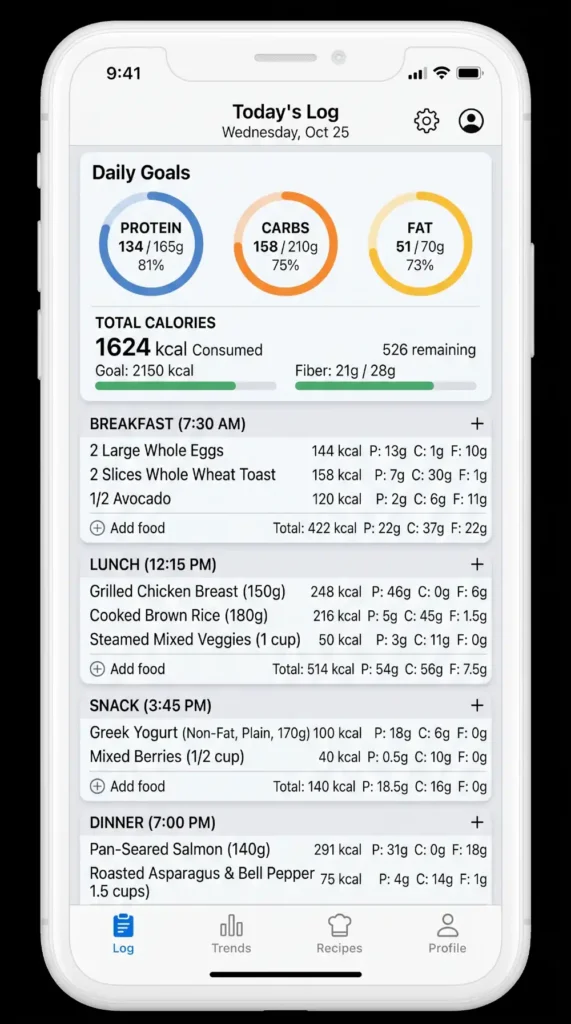
Learning how to track macros for Flexible Dieting becomes much easier once you consistently log meals for a few weeks and begin recognizing common serving sizes.
In the beginning, many people underestimate portion sizes without realizing it. Using a food scale for a few weeks can help improve accuracy and teach you what realistic serving sizes actually look like. Most people become much better at estimating portions over time once they build that awareness.
Be Flexible, Not Careless
Enjoy treats in moderation, prioritize whole foods, and remember that progress happens through balance.
Frequently Asked Questions
Also Read: Tracking Macros in Vegetables
Final Thoughts
Flexible Dieting isn’t about eating “whatever you want.” It is about balancing your nutrition goals with real life in a way that actually feels sustainable.
When you master your macros, you master your mindset. You stop fearing food, start trusting yourself, and finally build a nutrition plan that lasts.
So whether you’re aiming to lose fat, gain muscle, or simply feel your best — make flexibility your foundation. Because real success isn’t just about what you eat — it’s about how long you can keep doing it.